
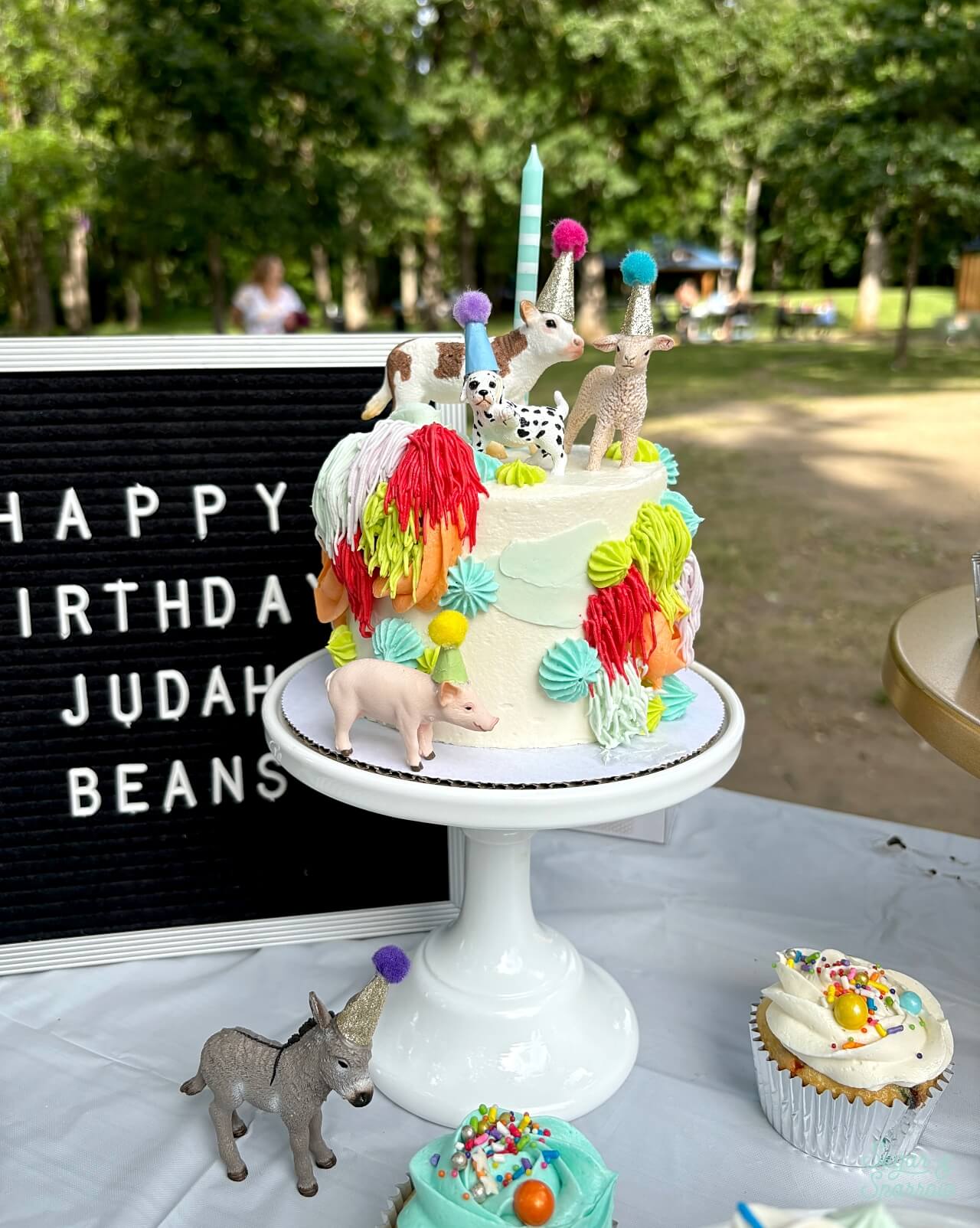
One Summer, something happened to me that had never happened before (and thankfully hasn’t happened since): one of my cakes melted in the outdoor heat. I made a birthday cake for a dear friend’s daughter – my vegan vanilla cake with vegan vanilla buttercream. The party was outdoors and the temperature was around 85ºF (29ºC). I refrigerated the cake up until I needed to drive it to the party, thinking that would be enough to preserve it for a few hours. But about an hour after the cake was displayed, the thing started melting (along with my heart). Thankfully, these were the kind of friends who were able to laugh about it with me as it all fell apart.
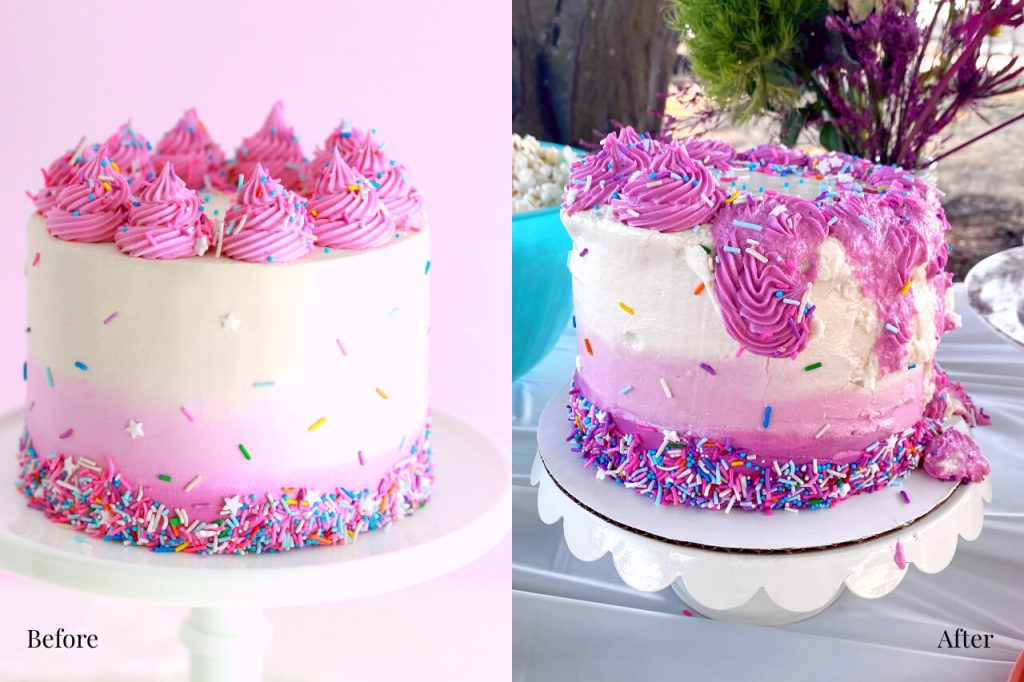
In light of the melted cake, I decided to conduct some experiments to find the perfect buttercream recipe for hot weather that actually tastes good! The winning recipe can be adapted to make all kinds of flavors and has gone on to help many readers create buttercream cakes that handle the heat of outdoor events all over the world.
One Reader, Shauna, says: “This is my new go to vanilla icing! I used it for my sister’s wedding cake – an outdoor reception in July in the South. It was hot and humid and this cake remained beautiful. Not only did it hold up well, it was absolutely delicious and not nearly as sweet as normal American buttercream. A lifesaver!”
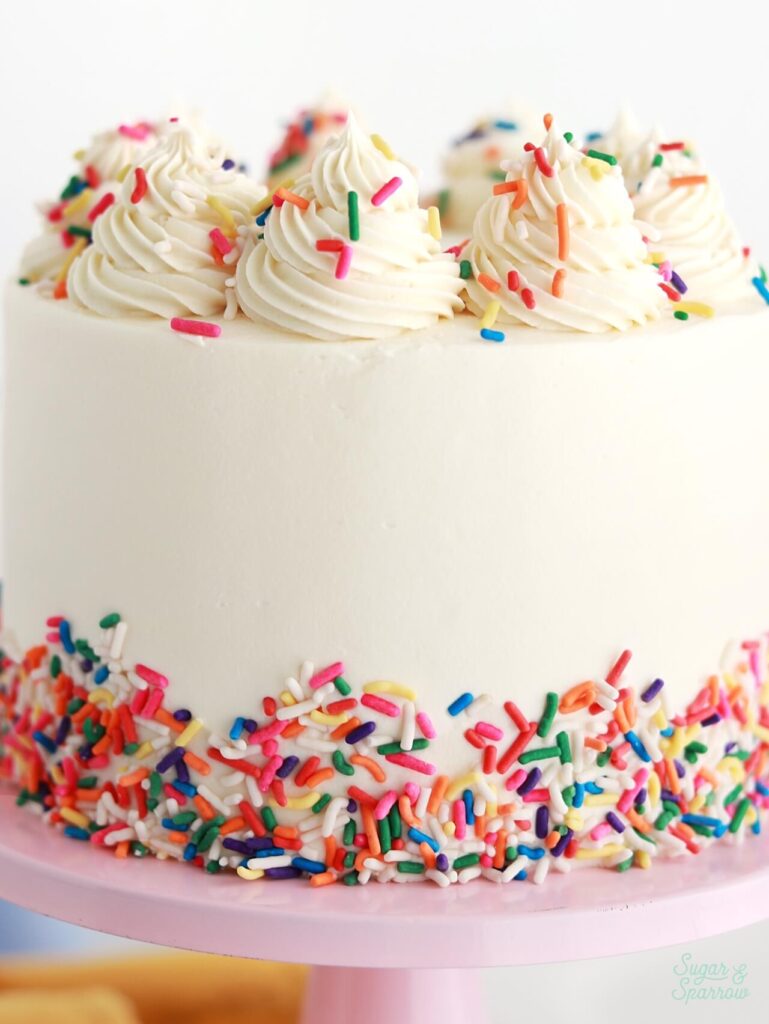
How Hot is Too Hot for a Buttercream Cake?
Whether you’re using American buttercream, Swiss Meringue buttercream, or another butter-based frosting, here’s what happens to buttercream cakes at different temperatures:
- Above 75ºF: the buttercream begins to soften.
- Above 82ºF: the buttercream starts to break down and buttercream details begin to droop.
- Above 90ºF: the buttercream starts to melt completely as it approaches the actual melting point of butter.
Keep in mind that the melting temperature for vegan butter is even lower, so these temperatures shift lower for a vegan buttercream frosted cake (like the melted one pictured above).
Ingredients that Stabilize Buttercream for Hot Weather
There are a few key ingredients that make the winning buttercream more heat stable:
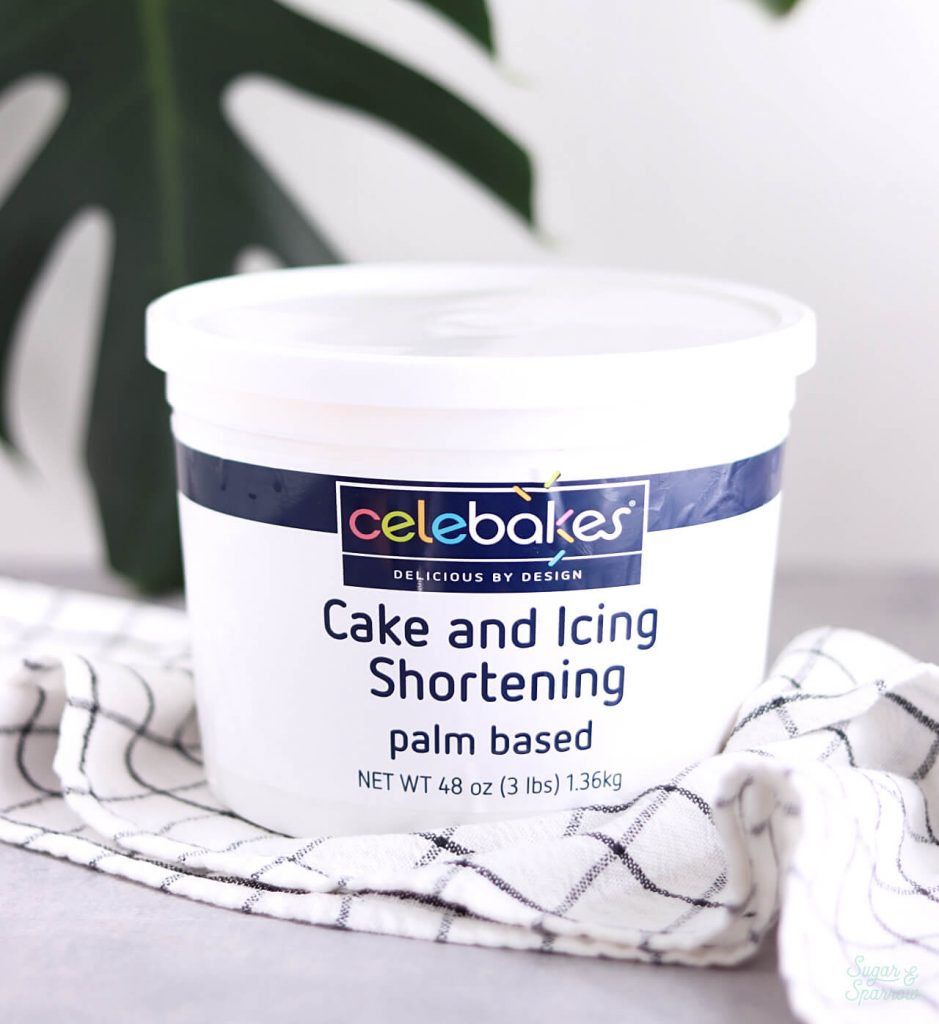
- Shortening. Replacing at least half of the butter in any American buttercream recipe with shortening will make it incredibly heat resistant. If you have access to it, opt for high-ratio shortening for the smoothest flavor and most heat resistance. If you can’t easily find it, Crisco will get the job done.
- Powdered Sugar. In an American buttercream (which is the base of the recipe pictured throughout this post), powdered sugar helps thicken the frosting and create an outer crust for the buttercream that helps keep its shape. I don’t use as much powdered sugar as the average American buttercream recipe which keeps the sweetness level minimal.
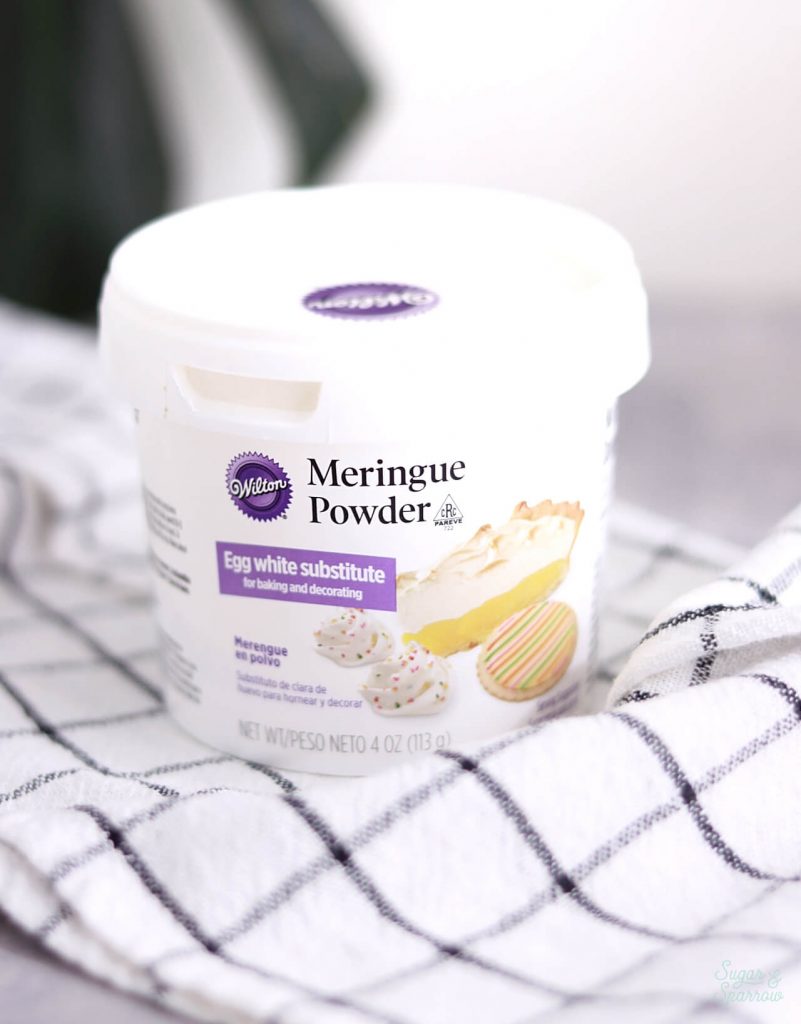
- Meringue Powder. This is essentially a mixture of powdered egg whites and other stabilizing ingredients like cream of tartar and gum arabic. Adding a little meringue powder helps absorb moisture and create more structure that helps frosting hold its shape (especially piped details) in warm weather.
Hot Weather Buttercream Recipe Tests
To come up with the winning hot weather buttercream recipe, I conducted an experiment to test out different ingredients for stabilizing. I created four cakes and decorated each with a different frosting using my favorite vanilla buttercream recipe as a base. I tested:
- All butter (aka the recipe as-is)
- Half butter and half shortening
- All shortening in place of the butter in the recipe
- Half vegan butter and half shortening (with coconut milk as the liquid)
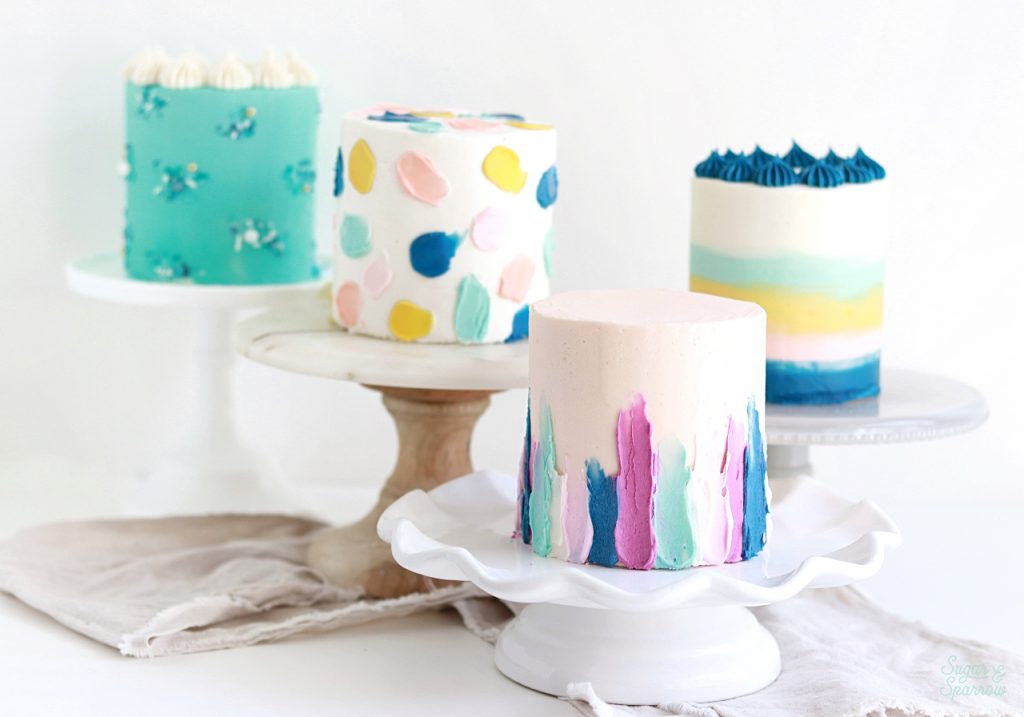
After refrigerating each cake until the frosting was firm, I placed them in the direct sun on an 88ºF day. Here’s a video of what happened:
I had the cakes in the sun for 2 hours, but none of them completely melted, which was kind of disappointing because I wanted things to be more dramatic. So in the end, I broke out the hair dryer to see what would happen with more heat applied. After I cranked up the heat on these cakes to the melting point of butter:
- The all-butter buttercream cake: melted into soup. No surprises there.
- The half butter and half shortening cake: started to settle a bit (but nothing crazy). This one had the best flavor for a heat stable buttercream.
- The all-shortening cake: had relatively no change, but the flavor wasn’t as good as it was with half butter.
- The half vegan butter and half shortening cake: got a huge air bubble in the frosting and started to melt.
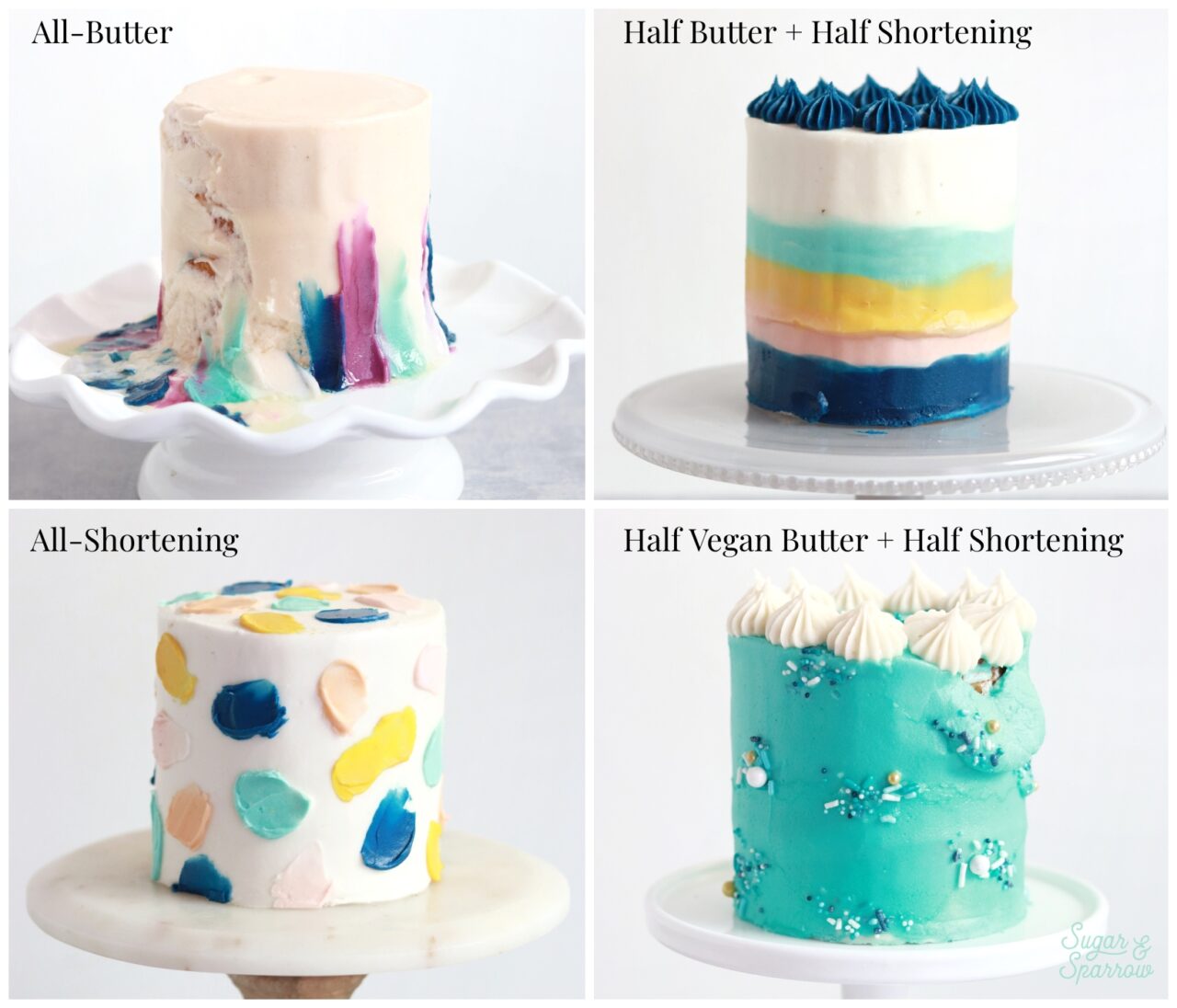
With taste and stability in mind, if you’re up against heat above 82ºF, I’d recommend using at least half butter and half shortening. If you need even more structure, consider adding some meringue powder (instructions in the recipe below) or using all shortening.
Hot Weather Buttercream FAQ
- Why does high-ratio shortening work better than Crisco? High-ratio shortening (also known as icing shortening) has a high ratio of fat with added emulsifiers and zero water content. This helps the frosting hold more sugar and liquid, makes it more temperature resistant, and the resulting buttercream has a much smoother (not greasy or gritty!) texture.
- What if I can’t find high-ratio shortening anywhere? It’s usually available on Amazon, but if you’re in a pinch, a regular vegetable shortening like Crisco will work just fine.
- Should I add meringue powder? If you’ve got a cake with intricate piping and are concerned about hot weather, I would add about 1 tablespoon of meringue powder per batch of buttercream for extra stability.
- Are there other ways to make heat stable buttercream? Adding shortening to an American buttercream recipe is the easiest way to make a heat stable buttercream, but I’ve also heard that Italian meringue and ermine frosting are both very heat stable.
Best Practices for Cakes at Outdoor Events
Now that you know more about how to make your buttercream cake more heat stable, here are some best practices for ensuring that frosting stays put at an outdoor event:
- Refrigerate the cake until the moment you need to transport it to your event.
- If possible, refrigerate the cake until you’re ready to display it at the event. This way, it should take at least an hour for the cake to come to room temperature while on display (the ideal temperature for eating the cake)!
- Place the cake in the shade, not in the direct sun.
- Read up on the weather and outdoor temperature beforehand, so you know how much extra stability you need in your frosting.
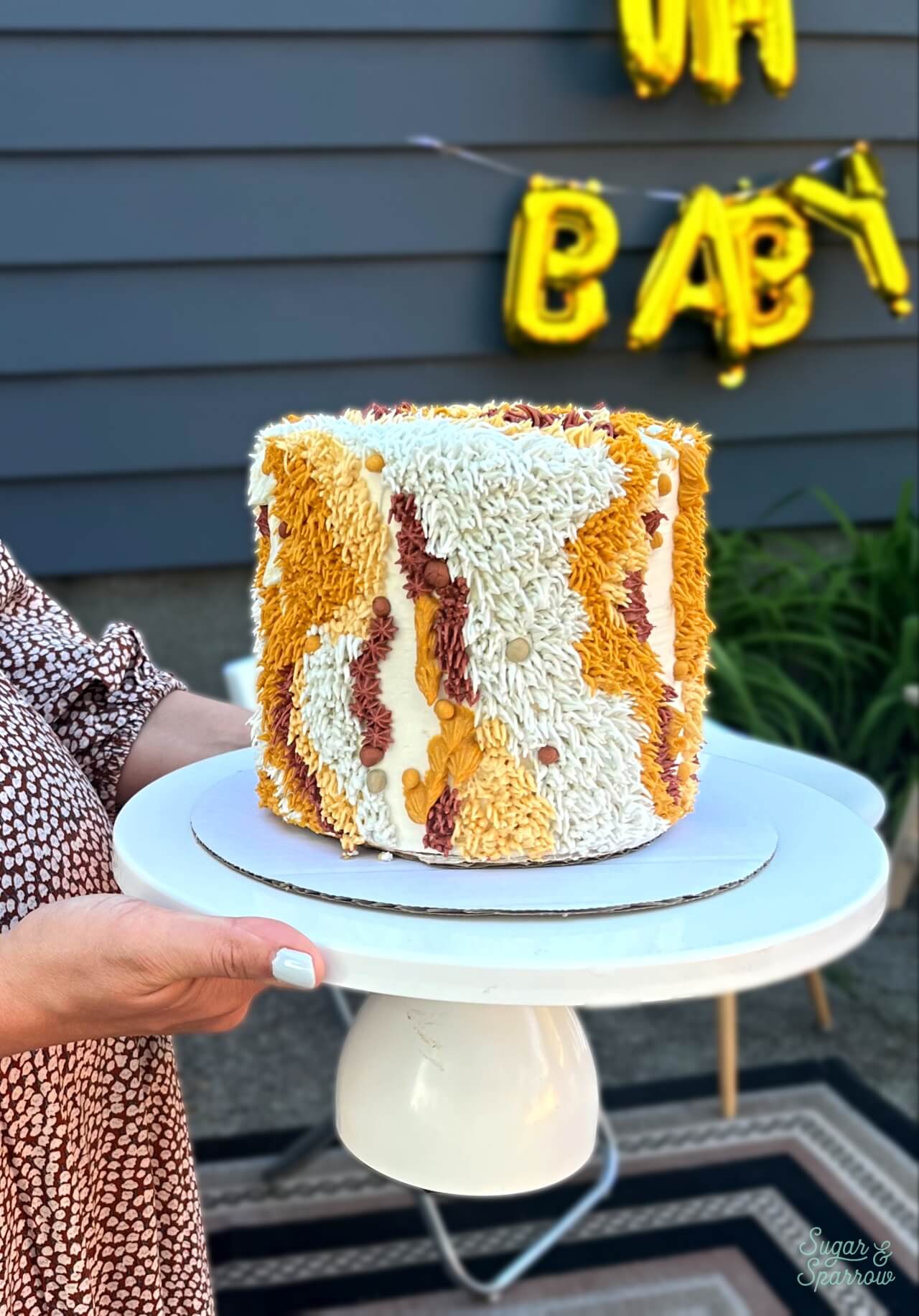
I hope this covers everything you need to know about making buttercream cakes heat stable! If you make this buttercream, let me know how it went in the comments below (don’t forget to rate the recipe!) and feel free to tag @sugarandsparrowco on Instagram if you post a photo. Happy hot weather caking!
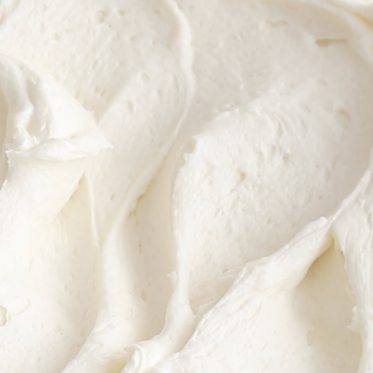
Heat Stable Vanilla Buttercream
Ingredients
- 1/2 Cup (113g) unsalted butter, room temperature
- 1/2 Cup (100g) shortening use high-ratio shortening if possible
- 3 1/2 Cups (420g) powdered sugar
- 1 Tbsp meringue powder (optional)*
- 2 tsp vanilla extract
- 2 Tbsp (30ml) whole milk or heavy whipping cream, room temperature
- 1/4 tsp salt, or to taste
Instructions
- With a hand mixer or paddle attachment on your stand mixer, cream the butter and shortening on medium-high until it’s creamy and light (almost white) in color, about 7 minutes.
- Whisk the meringue powder (if using) into the powdered sugar. Then, add the meringue/powdered sugar mixture one cup at a time, mixing on low speed and scraping down the bowl and paddle after each addition.
- Add the vanilla, milk, and salt and mix on low speed for another 1-2 minutes, until fully incorporated.
Notes
- Frost 12-15 cupcakes with a piping bag
- Fill and crumb coat a three-layer 6-inch cake or two-layer 8-inch cake. To have enough for frosting and decorating as well, double the recipe.
Did you try this recipe? I want to know that you think! Let me know in the comments below or feel free to tag @sugarandsparrowco on Instagram and show me. I love to see what you create! And if you have a go-to recipe for heat stable buttercream or technique that you swear by, let us all know in the comments. We’re all in this together!


Hi,
I live in the UK and we are currently experiencing a heatwave temp up to 30 Celsius and I have to bake a decorated a cake for this weekend.
My question is can I use Crisco or trex as I can’t get hold of the other shortenings you mentioned? Which one would be better? The temperature for Saturday when I’m decorating in 26 Celsius and Sunday when it’s going to be out is going to be 22 Celsius. Also I have seen a post somewhere saying you can substitute half the icing sugar with royal icing sugar and get the same affect as using shortening but without the taste, do you know if this is true?
Hi Sharon! I would recommend Crisco over Trex for the frosting, it will keep the shape of the frosting best! I’ve never heard of royal icing sugar but I know that adding meringue powder (which is an ingredient in royal icing) will add stability. 22ºC-26ºC isn’t horribly hot, so I think you’ll be fine with using half butter and half Crisco for the frosting, then store the cake in the refrigerator until 1-2 hours before serving. Hope that helps!
Hello!! Your recipe looks amazing and I love that you use meringue powder in it. I am wondering if this stable buttercream frosting meets the requirements for Wisconsin cottage law? I am looking for a stable buttercream for my cookies and am hoping this would work!
Hi Kendra! I’m not familiar with Wisconsin cottage law, so I can’t say for sure. I would look up what the law requirements are and compare it with the recipe. The buttercream doesn’t require refrigeration because the small amount of dairy is preserved with the sugar content, and it stays fresh for about 5 days at room temperature. I hope that helps!
Hello. Is it OK to store my cake outside of the refrigerator overnight, if I use the recipe that is half butter, half shortening, and meringue powder, and the room temperature is below 74°?
Hi Heather! Yes, it’s totally fine to leave the cake out overnight for a day or two. I like to refrigerate my cakes just to preserve the decorations but I always bring them back to room temp for serving. Hope that helps!
Hi Whitney, I have a few questions that I need answered quickly I have to start baking in two days and I want time to practice!! Sorry for rushing you. So I’m baking 108 cupcakes for a 4 hour long birthday party it will be inside but with that many people in a small room it will be hot. Also I will be decorating my hem two days in advance and serving them on the third day. So my first question is will vegetable shortening without it be high ratio be good enough for it to sit at room temperature for three days? And will the vegetable shortening change the consistency of the frosting to much to where it would not be able to be piped? Basically will it all work out completely fine if I use it. Second I know I will have to try to cool the cupcakes down but they will be sitting in a building completely without AC and without a fridge or a freezer. Will they be okay? I think that’s all I need to know I’m sorry it’s a lot, but I do need to know really quickly the answers.
Hi Delaney! Using vegetable shortening will make the frosting more stable, even if it’s not high-ratio shortening. It will still be perfectly pipeable. I would substitute half of the butter in the recipe with shortening for an event with those conditions. You could consider substituting all of the butter with shortening, but the flavor of the frosting won’t be as rich as it is with some butter in the mix. I hope that helps!
Hi there I made the heat stable vanilla buttercream and it was to die for everyone loved it!! Just wondering if I were to make a lemon flavoured batch of this and added lemon juice instead of the vanilla if that would affect the stability in any way ☺️
Hi Tayana! I’m so happy you love this recipe! For lemon flavored buttercream I would use this recipe: https://sugarandsparrow.com/lemon-buttercream-recipe, but sub half of the butter for shortening and add 1 Tbsp meringue powder. Enjoy!
Hi! Thank you so much for this recipe, I want to try it out, but meringue powder is quite hard to get here in my area, what’s a nice substitute for this?
Hi Joh! I have heard that an equal amount of cream of tartar can be used as a substitute. If you can’t find either of those, you can omit that part of the recipe and still have a great heat stable frosting with the shortening/butter combo. Hope that helps!
Thank a lot for sharing this recipe turned out great, was for a wedding cupcakes and it was extremely warm with no AC.
Yay, Rina! I’m so happy to hear that it was a success!!
How would this work with cream cheese frosting?
Hi Porsche! In the same way, you’ll just sub half or all of the butter in a cream cheese buttercream recipe with high ratio shortening, and add 1 Tbsp of meringue powder per batch.
How would you do the recipe with cream cheese or do you have a stable cream cheese frosting recipe that would work without it being melted?
Hi Rochelle! For a more stable cream cheese frosting, I would sub half of the butter in the recipe with shortening and add 1 tbsp of meringue powder to this recipe: https://sugarandsparrow.com/cream-cheese-buttercream-recipe/
Hello I was wondering if I can substitute the milk or heavy cream for water just because I cannot use/sell anything with potentially hazardous ingredients as a local cottage food producer. Thank you:)
Hi Skylar! Water won’t bring this buttercream recipe together nearly as well since it doesn’t have any fat to bind the ingredients together. I think the dairy ingredients in frosting are okay as long as it’s not cream cheese buttercream, which requires strict refrigeration. This frosting doesn’t require refrigeration since the high amount of sugar in the recipe ends up preserving the dairy. If you’re worried about it, you could use a non-dairy milky. Soy milk would be my top recommendation.
Hi, the amount of powdered sugar is too sweet for my taste. Can I reduce one cup of sugar and add an additional spoon of merengue ?
Hi Claudia. You can try reducing the amount of powdered sugar, although I’m not sure if the consistency will be too thin when reducing it by a full cup. I have reduced the amount by 1/2 Cup successfully, but a full cup will be an experiment. Let me know how it turns out if you try it!
What kind of shortening do you recommend? Does it make it taste different if you only use shortening? Do you have any recommendations for making an orange buttercream?
If you can find hi-ratio shortening (aka icing shortening) that is the best to use because it contains certain ingredients that allow the frosting to hold more sugar and liquid and thus make it more temperature resistant. This is a good brand: https://store.sweetlifecakesupply.com/products/sweetex-high-ratio-shortening?variant=43727730180399 but any vegetable shortening will be more heat resistant than butter. It will taste different if you use all shortening, I explain the flavor in the blog post above.
By orange buttercream do you mean flavor or color? For my favorite orange flavored buttercream recipe I recommend the frosting from this cake: https://sugarandsparrow.com/cranberry-orange-cake-recipe/ if you mean coloring the frosting orange, I’d recommend adding some orange food color gel until the desired color is reached.
Hi, how do you prevent your cakes from sweating after removing it from the fridge when it it for a daytime outdoor event? I’ve found that the cake is fine until I put it in the fridge, as it sweats once removed. I’ve tried letting it sit in a cake box for about an hour but it still sweats once it’s removed from the box and put on display. Thanks
Hi Natalie! I’ve never had an issue with condensation, but probably because I live in a really mild climate (pacific northwest). From what I’ve read, the only thing you can really do is minimize the temperature difference between the refrigerator and the outside air. Condensation happens when there’s a big and/or sudden change in temperature. I have found that when I keep my refrigerator at around 40ºF I never have an issue with condensation (my house is about 70ºF), but when I keep the refrigerator at a lower temp like 34ºF the cake is more likely to have condensation. Perhaps try experimenting with your refrigerator temperature? That’s the only advice I can offer!
Just moved to Louisiana and it’s the first time I’ve had to think about heat stable frosting for a September party. Learned a lot from this, and it worked wonderfully!
Yay, Rae! So happy this was helpful!
Just made this recipe and it was a huge hit and the frosting stood up to the heat. I read in your article it can be refrigerated up to two weeks. How long could this frosting be left on the counter and can leftovers be put in freezer for later use?
Hi Amanda! So happy this frosting was a hit! It can be left out at room temp for up to 2 days, leftovers can be kept in the freezer for up to 2 months. Hope that helps!
I made a triple batch of this (which all fit in my kitchen aid stand mixer bowl, yay) and it was just enough to crumb coat, frost, and pipe decorations on two 9×13 cakes. I had about a cup of frosting leftover. It pipes and holds its shape super well. I bought the high-ratio shortening from Sweet Life Cake Supply and was happy with it.
Yay, Abby! So happy this recipe was a hit!
Hi Krystal! It definitely shouldn’t have a playdoh-like consistency. It should just be a spreadable, pipeable frosting consistency. I’ve never tried the heating method while coloring this particular recipe, so my first thought is it could have something to do with that (maybe a chemical reaction with the meringue powder in the microwave?). Was the frosting a good consistency until you heated it in the microwave for coloring? My only other thought is that somehow you added too much powdered sugar/not enough liquid. Hard to say for sure.
Hello!
The shortening you recommend isn’t available any longer and the Sweetex is a 50 lb container LOL. What other brands do you recommend? I’d like to try this substitute for the generic, everyday vegetable shortening. No cake or kitchen stores anywhere near where I am, unfortunately!
Thank you – and please keep your great recipes up!!
– Fiona
Hi Fiona! High ratio shortening is hard to come by lately! It should still work with regular vegetable shortening as a sub.