
One of my favorite easy things to dress up a cake is to do a chocolate ganache drip finish. Over the years, my ability to create the drip look has definitely grown, and I get tons of questions asking what my secret is. The truth is, chocolate ganache has definitely put me through the wringer before (especially white chocolate ganache, which used to be my absolute nemesis). After figuring out the perfect ratio for chocolate to heavy whipping cream and learning the do’s and don’ts of drip cakes, I’ve got it down to a science these days. And now you will too!
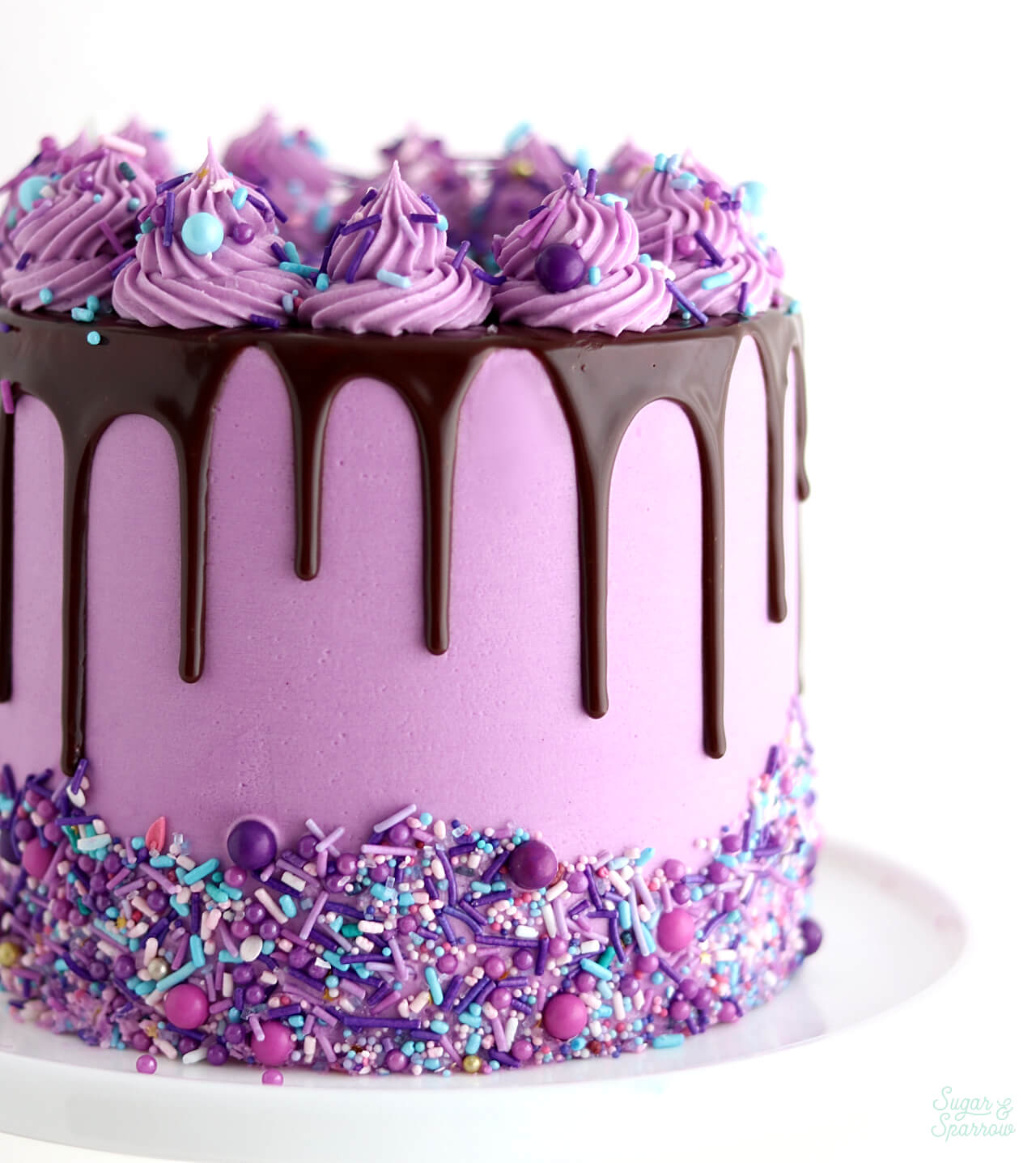
How to Make Chocolate Ganache for Drip Cakes
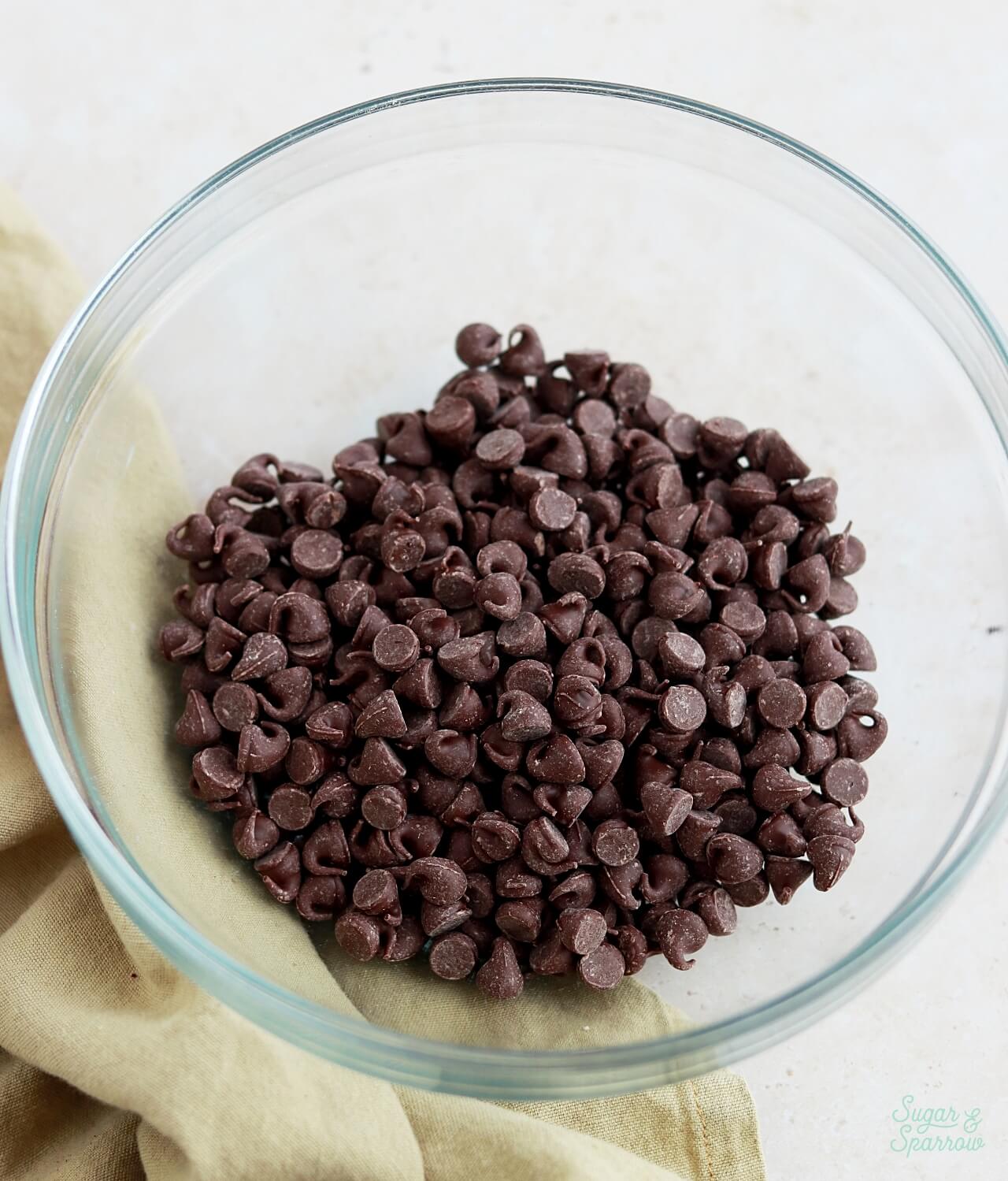
This chocolate ganache recipe has been my go-to forever, and it involves only two ingredients: chocolate and heavy whipping cream. There’s no need to be intimidated with this one. First, measure out the chocolate chips (or quality chocolate bar chopped into bits) into a glass or metal bowl. I like to measure these by weight for precision, but I’ve provided both metric and Cups measurements in the recipe below.
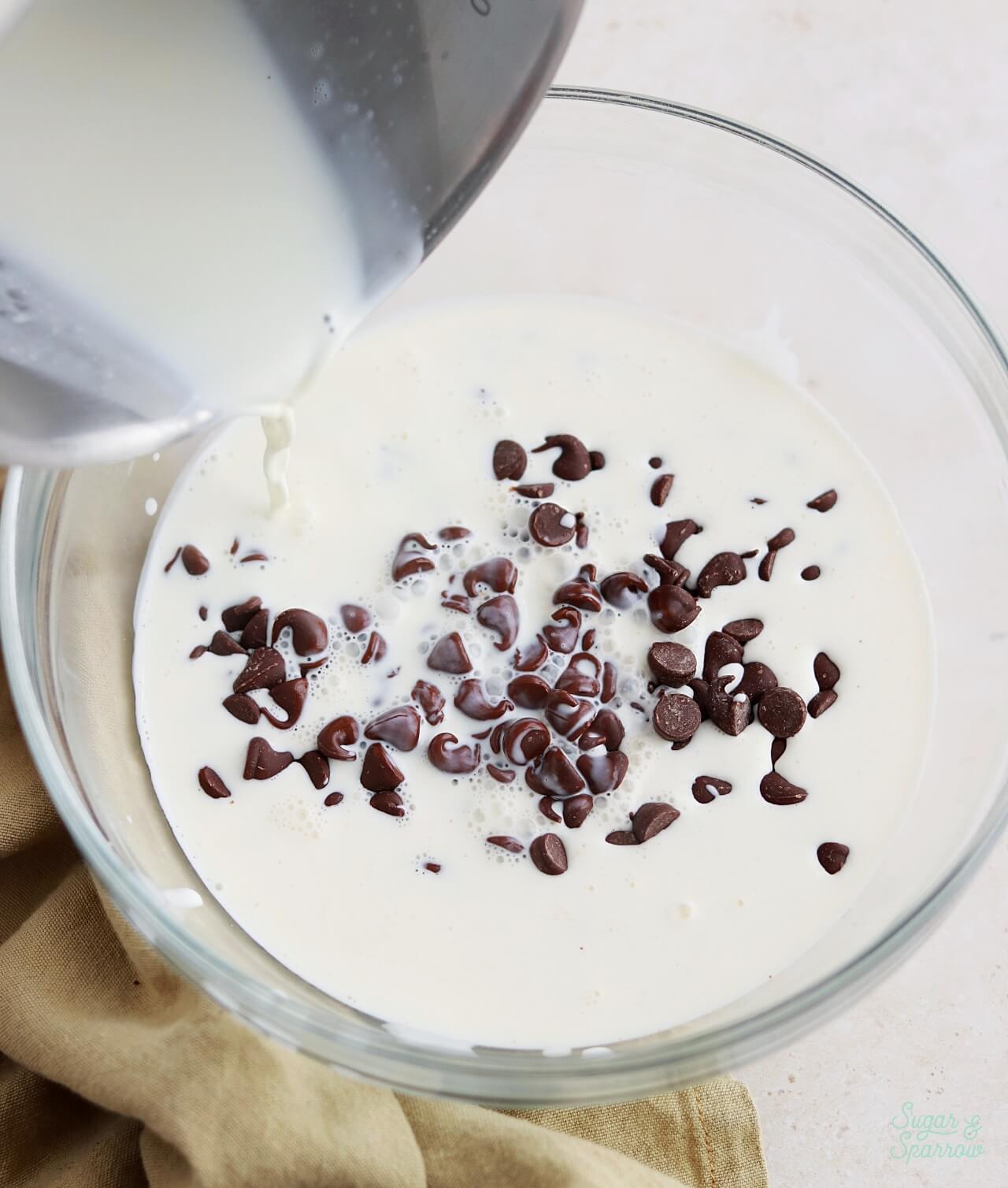
Next, bring the heavy whipping cream to a soft simmer in a saucepan over medium heat. Then, pour it over the chocolate and let it sit for about 30 seconds. This gives the chocolate a chance to soften up before whisking.
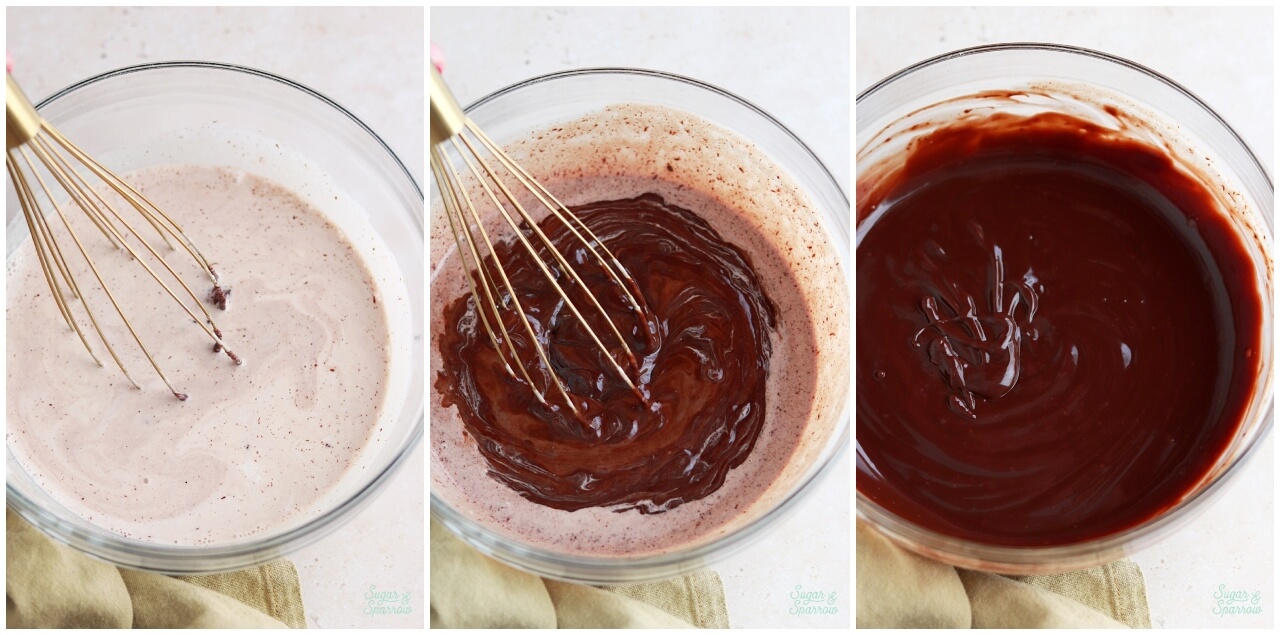
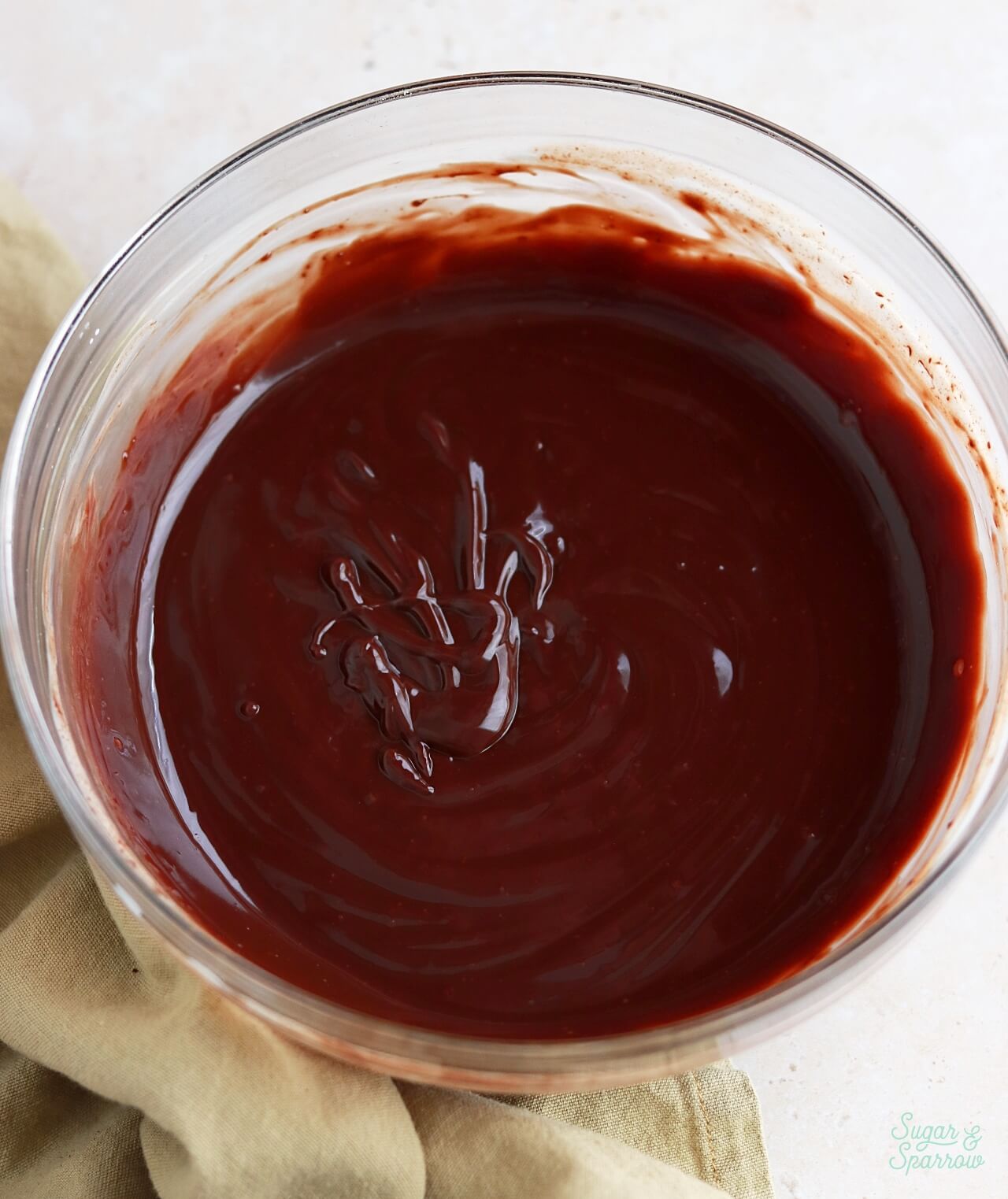
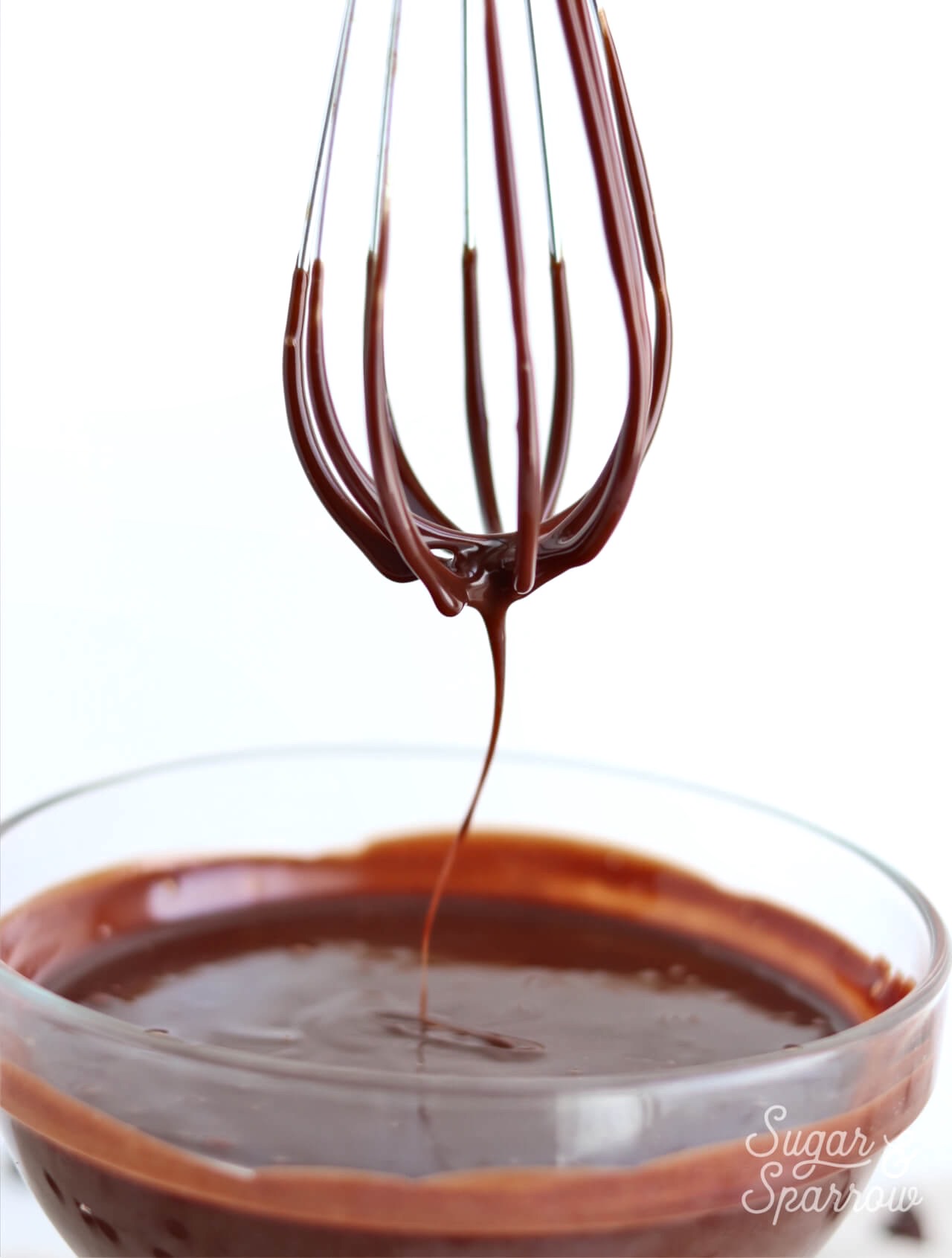
Whisk the cream and chocolate together until it’s uniform. It will look thin and resemble chocolate milk before it starts to come together, but keep whisking until it’s smooth.
Finally, let the chocolate ganache cool until it’s room temperature or slightly above. I recommend testing out a drip on an inverted glass to make sure it doesn’t drip too far (if it does, keep cooling it) or not far enough (if this is the case, warm it back up slightly in 5-second intervals in the microwave until it’s perfect drip consistency).
The type of chocolate you use will determine the amount of heavy whipping cream to incorporate for the perfect consistency. Although semi-sweet chocolate is the most common type I use for drip cakes, I’ve listed the ratios I use for all different types of chocolate below.
Although the recipe seems straightforward enough, there are quite a few tricks to learn before mastering the art of the drip. I’ve listed out a basic step-by-step tutorial and some troubleshooting tips below, but first, here’s a detailed video to show you how to make the recipe and everything you need to know about the technique I use for drip cakes:
Want to see more Cake Basics videos like this one? Head to my YouTube Channel to see the growing collection. You’ll also find tons of cake recipes and decorating videos there to inspire you and broaden your skill set – be sure to hit the subscribe button so you never miss a new one!
Chocolate Ganache For Drip Cakes
Ingredients
- 1 cup (185g) semi-sweet or milk chocolate chips, or a bar chopped up into bits
- 1 cup (240ml) heavy whipping cream
Instructions
- Place chocolate chips into a heat resistant bowl (glass or metal). If you’re starting with a chocolate bar, chop it into small pieces until they’re about the size of chocolate chips.
- In a saucepan over medium-high heat, warm heavy whipping cream until it just starts to simmer. I always look for small bubbles forming around the edge and a soft simmer starting in the middle. When it's reached this point, pour the cream into your bowl of chocolate and let sit for about 30 seconds.
- Whisk it together until it’s uniform in consistency and there are no bits of chocolate left on your whisk. Cool ganache at room temperature for 10-20 minutes, or until the ganache itself is room temperature or slightly above.
Notes
Tips For Perfect Chocolate Ganache Drip Cakes
Tip 1: Be Patient With The Cooling Process
Once you’ve whisked the ganache together, it’s crucial to let it cool on your countertop until it’s room temperature or slightly above, about 10-20 minutes depending on how cold your environment is. Trying to speed up this process by placing ganache in the refrigerator doesn’t usually end well – I’ve found that it cools unevenly, leading to thick, globby drips.

Cooling in the fridge also leads to the urge to stir it too often. Ganache (especially white chocolate!) does not like to be stirred too often, and the end result can mean that your whipping cream starts to separate from the chocolate. You’ll know that this has happened because the ganache will look grainy and dull, or even separated like oil and water. To fix situations like these, you’ll need to reheat the ganache to 92ºF to melt the fat crystals and re-whisk to bring it back together.
Tip 2: Make Sure Your Buttercream Is Chilled
There’s a science to this tip. Since molecules move more slowly at cooler temperatures (and warp speed at higher temperatures), it makes a lot of sense that you can better control how far the chocolate ganache drips when the buttercream is chilled. Make sure that after you do your final coat of buttercream, you chill the cake in the refrigerator for at least 30 minutes.
Tip 3: Always Do A Test Drip
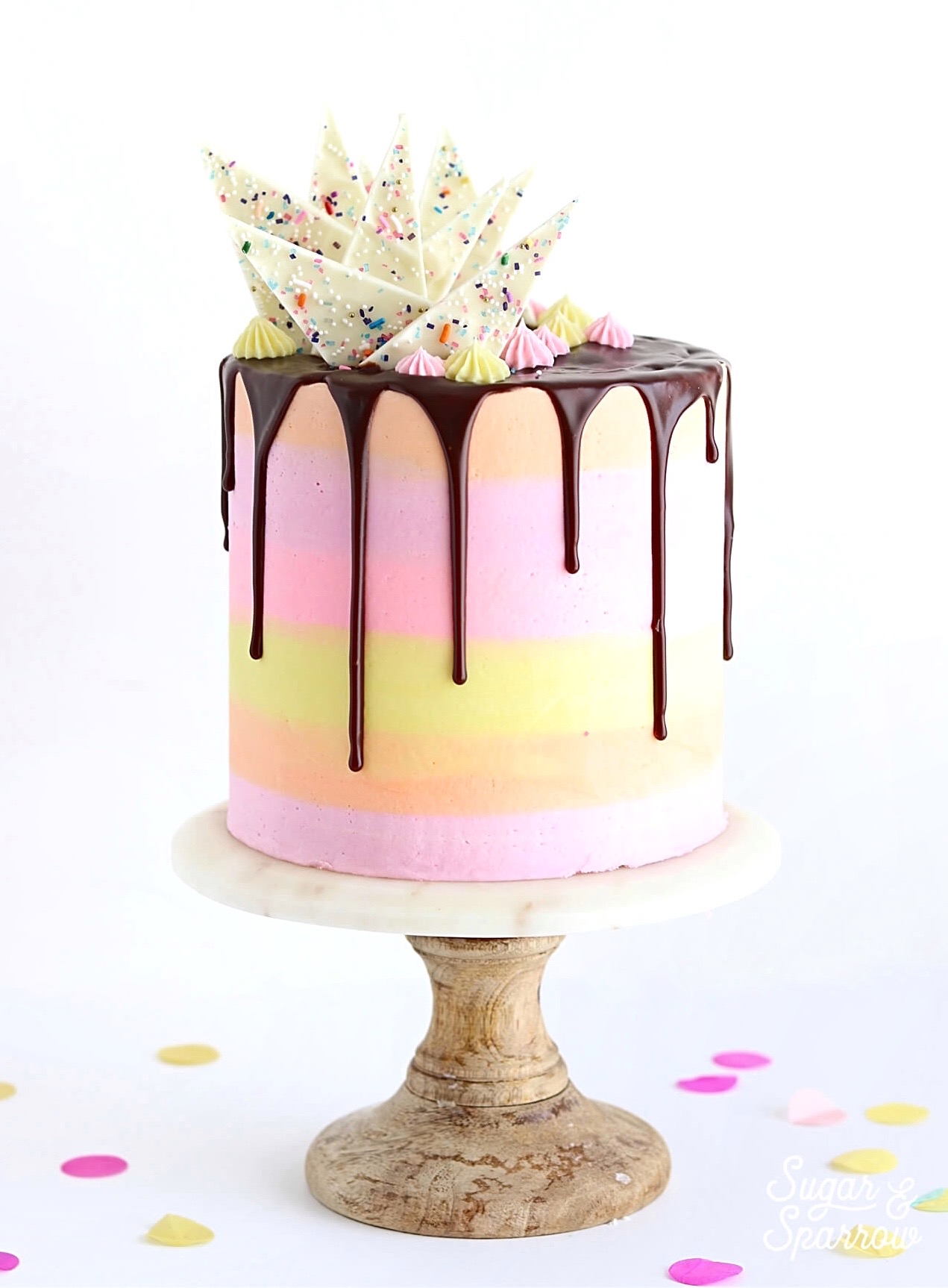
When your buttercream is nice and chilled, do a test drip by letting the ganache run down the side of your cake. If it travels rapidly and pools at the bottom, your ganache is too warm. Continue to cool the ganache for another 5-10 minutes and try your test drip again. If it’s globby or doesn’t travel very far down the side of the cake, it’s too cold. Reheat the ganache in the microwave for about 10 seconds, stir, and try again. Repeat the reheating process as needed until you get the perfect consistency.

The good thing about a test drip is you’re able to see how the ganache will behave. That way you don’t have to commit until you like what you’re seeing.
Tip 4: Drip The Sides Before Filling In The Top
When I first started caking, my initial thought was to just dump ganache over the top of the cake and let it run down the sides naturally. If you’ve ever tried that before, you’ll know it doesn’t end up looking good. You’ll have a lot more control over the appearance if you start by dripping the sides until they’re aesthetically pleasing before filling in the top of the cake.

Try not to add too much ganache to the top when filling it in, because if you add any more to the drips you’ve created, it will make them travel farther than you’d like. Instead, try to use just a little ganache and spread it so that it just touches where your drips begin. The ganache on the top should self-level a bit, so don’t worry too much about getting it super smooth.

Tip 5: Don’t Touch Those Drips
If you’ve ever made a drip cake with ganache before, you’ll know that it’s a little sticky to the touch when it’s room temperature. When the drips have been refrigerated, they’re a little less fragile, but try not to touch the drips at all during the decorating or boxing-up process.
Chocolate Ganache Troubleshooting Tips
Since the consistency of your ganache is pretty much everything when it comes to a successful drip cake, I wanted to take a moment to talk about what to do if your drips are too thick or too runny. Most of the time, it doesn’t take a whole lot to bring your ganache back to ideal drip consistency. Here are some common problems and ways to solve them:
Problem 1: The drips are pooling at the bottom of the cake – this typically means your ganache is too warm, in which case I recommend to give the ganache 5-10 more minutes to cool down before attempting your next test drip on your chilled buttercream cake.
If you’ve let the ganache cool for a significant amount of time and the drips are still too runny, it means that too much liquid (heavy whipping cream) was incorporated into the recipe. To fix this problem, you’ll need to thicken the ganache with more chocolate. This will mean melting about 1-2 additional oz of chocolate in the microwave, warming the existing ganache to the same temperature as the melted chocolate, then whisking it all together before letting it cool back down to ideal drip consistency.
Problem 2: The drips are thick and gloppy – this means your ganache is too set (or too cold). To fix this, gently warm the ganache in the microwave in 5-10 second increments until it’s ideal drip consistency.
Problem 3: The ganache has split – this has never happened to me with this recipe, but if your ganache looks grainy or seized, it means that for some reason, the fat is separating from the liquid. To fix it, gently reheat the ganache in the microwave or over a double boiler to 92ºF to melt the fat crystals, then re-whisk to bring it back together.

Is there anything else you’d like to know about drip cakes? I’m certainly not an expert per se, but if you have more questions, let me know in the comments below and I’ll do my best to answer!

Hi there, wondering if this could work on a whipped frosting as long as it’s chilled prior to doing the drip?
Hi Hayley! Yes, this will work on a chilled cake with whipped cream frosting. Enjoy!
I love al of your recipes! I’ve made this as a drip, and it’s wonderful. If I wanted a chocolate ganache filling in between my cake layers, could I use this recipe and just put it in the refrigerator until it thickens?
Hi Kristi! I’m so happy you love this recipe! You can absolutely use it as a filling by refrigerating until cold. It will be about the consistency of creamy peanut butter at this point. Just be sure to pipe a buttercream dam around the edges of your cake layers before filling in the center with the chocolate ganache. This way it won’t budge in between your cake layers. Hope that helps!
Hi! Looking forward to making this — I’m planning on doing this for your coffee layer cake. Would a mix of dark and milk chocolate be good for the ganache drip for that cake? I’m wondering if it would be more balanced for the coffee layer cake than just semi sweet or milk. If so, how much heavy cream do you think? Thank you!
I’m excited for you to make my coffee layer cake, Katie! Are you thinking of making two separate ganaches (one with dark chocolate and one with milk chocolate) and dripping them together for the cake? Or mixing both chips together to make one ganache? I personally think the semi-sweet chocolate ganache is perfect for the coffee layer cake recipe, but if you want to make two separate ganaches you can make the dark chocolate with a 1:1 ratio + 2 Tbsp extra cream and then the milk chocolate with a 1:1 ratio. If you want to mix the chocolate together for one ganache, a 1:1 ratio should be fine.
Did you put the sprinkles on the cake (around the bottom) before the ganache drip? I would think so, yes?
Hi Christine! Yes, I put the sprinkles around the bottom first, then added the ganache drip.
Can I use this recipe as a French macaron filling? I am curious if it is thick enough, or what I could do to thicken it if needed.
Hello I made the ganache to go with your coffee cake. But for some reason when refrigerated the drips left small pools of liquid at the bottom of the cake. Is there any reason for this? I need new pans so I did use the microwave on a gentle and whisked it every 20
Seconds. Thanks x
Hi Frankie! It sounds like the ganache was too warm when you dripped the cake if it pooled at the bottom. Next time after whisking the ganache ingredients together, wait until the ganache is room temperature or just slightly above. You can always do a test drip on an upside down glass or on the cake itself to see how far the drip will travel. If it doesn’t stop before reaching the bottom of the cake it’s too warm and you should wait another 5-10 minutes before trying another test drip. Hope that helps!
Would the same recipe be used if you wanted to “curtains” drip a cake?
Yep! This recipe works great as a curtain drip. Enjoy!