
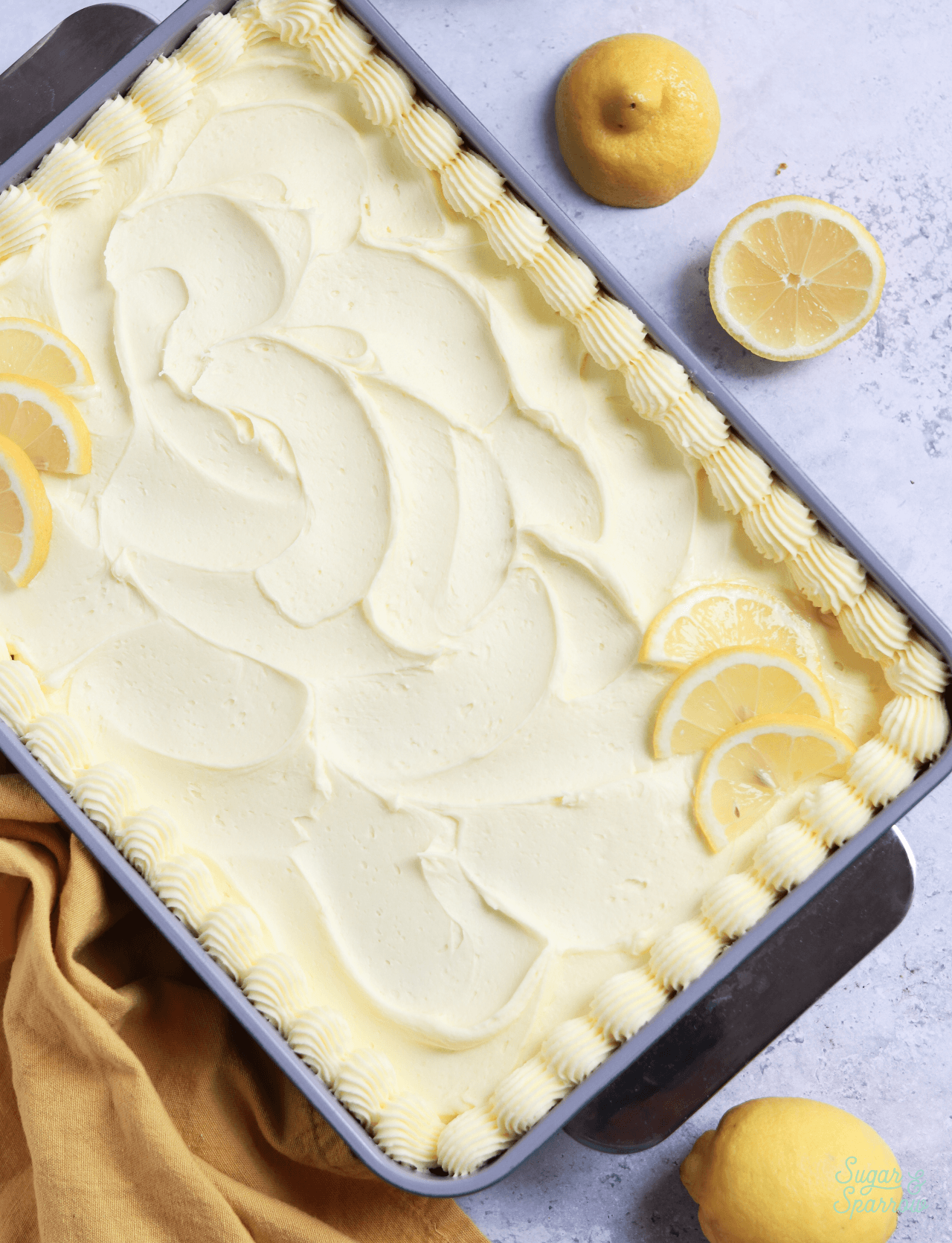
Adapted from my beloved lemon layer cake recipe, this sheet cake version is just as soft and moist with the perfect zesty lemon flavor! It’s frosted with delicious lemon buttercream to make it extra bright and uses every part of the lemon for a fresh, natural lemon flavor in every bite. Baked in a 9×13 pan, it’s so fun (and easy!) to decorate and perfect for feeding a crowd of up to 30 people. It’s the ideal dessert for any Spring or Summer party!
Why You’ll Love This Lemon Sheet Cake
- Perfectly bright lemon flavor. The lemon flavor in this cake really shines! You’ll blend lemon zest into the sugar at the beginning of the recipe, add a little lemon extract to amplify it (optional, but amazing!), and use the juice of the lemon to make homemade buttermilk for adding at the end of the recipe. You’ll also use lemon juice in the frosting. Altogether, you’ll create a bright and zingy lemon flavor in every bite.
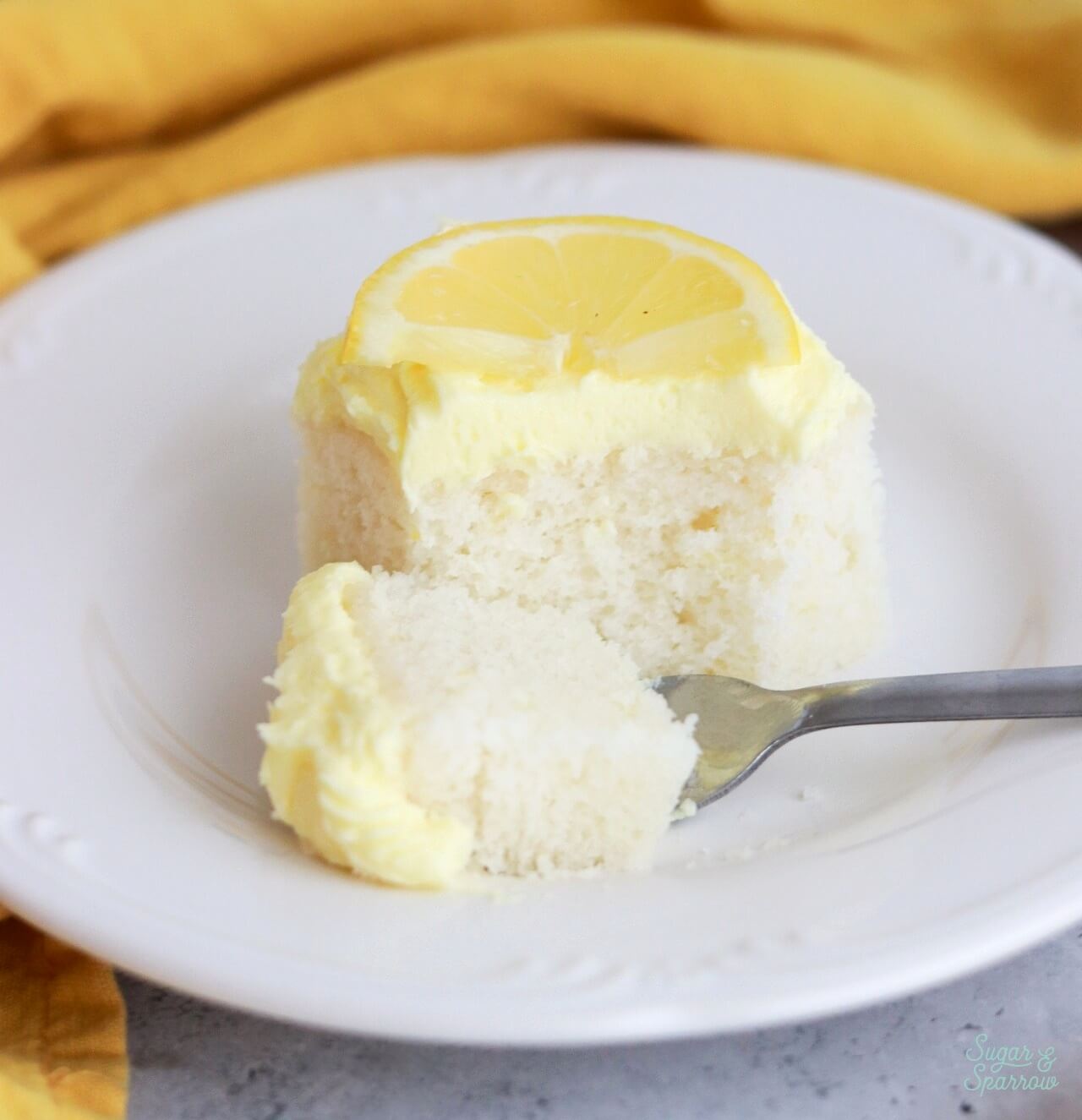
- Super soft and moist. Between the cake flour, vegetable oil, and homemade buttermilk, this recipe yields a lemon cake that’s amazingly soft and moist (and stays that way for days)!
- Simple to make. This recipe uses simple ingredients and the instructions are super detailed to make it as easy as possible! Even if you’ve never made a cake from scratch before, I promise you can knock this one out of the park.
- Easy and FUN to decorate. Contrary to a layer cake, sheet cakes are very straightforward when it comes to decorating. You can choose to frost and decorate the cake in the pan (like I did) or remove it from the pan and decorate it on a cake board. Either way, you won’t have to worry about filling and stacking cake layers or getting meticulous with the frosting.
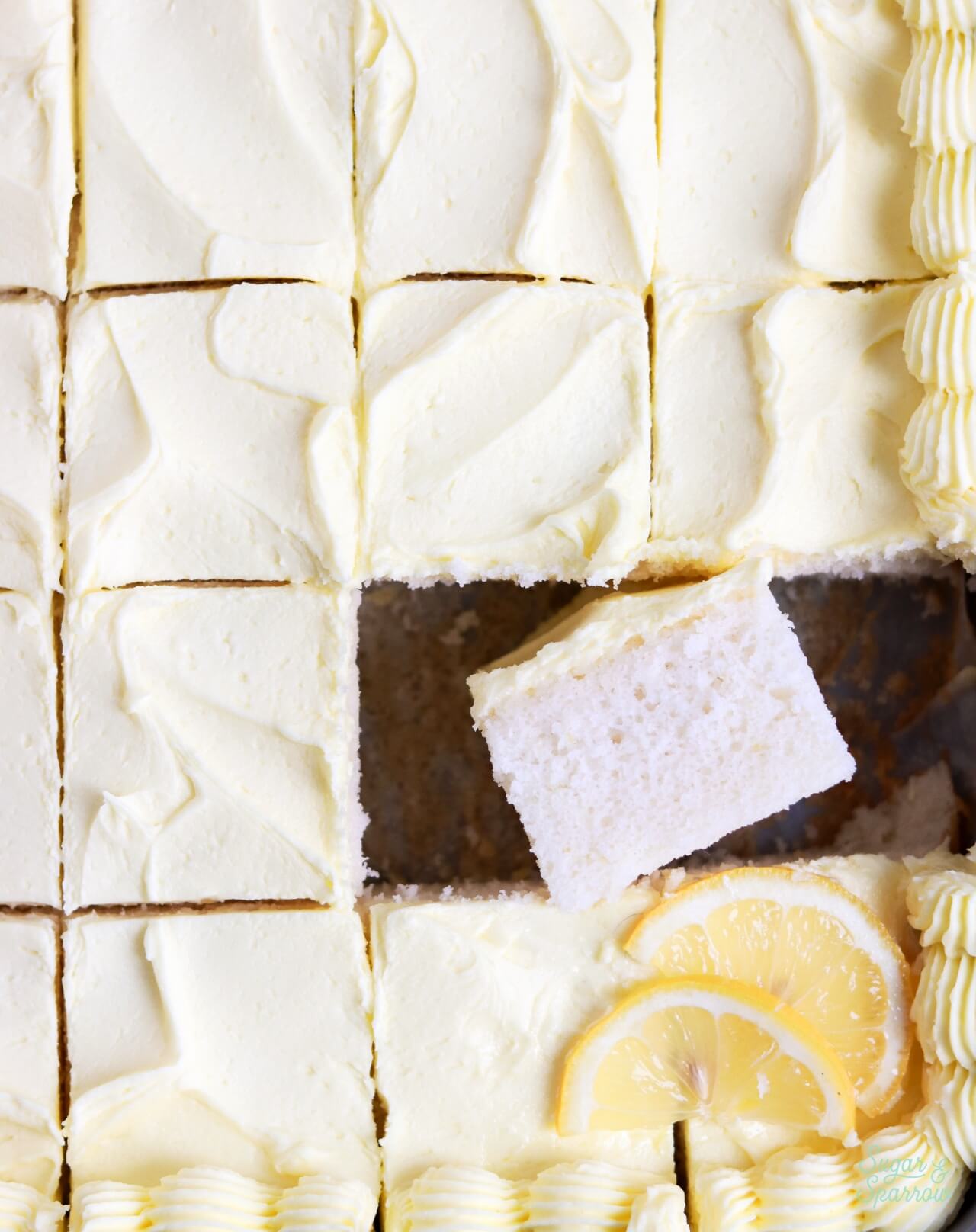
- Ideal for feeding a crowd. Not only is a sheet cake convenient to transport to an event, it’s easy to slice for serving a crowd. Depending on how you slice this cake, you’ll get between 24 and 30 slices.
Lemon Sheet Cake Ingredients
This recipe makes the softest lemon cake that is so moist and stays that way for days! Here are all the ingredients that make it special:
- Cake flour. To achieve the super soft texture, cake flour is a must. It produces a much fluffier cake than all-purpose (or plain) flour because of its lower protein content (the more protein in your flour the stiffer the dough and less ability to maintain moisture). You can find cake flour at most grocery stores, but if all you’ve got is all-purpose flour in your pantry, here are instructions for how to make your own cake flour. Keep in mind that if you do use the homemade version, the gram measurement will weigh more (331g instead of 265g) since all-purpose flour is heavier than cake flour.
- Baking powder. Like many lemon cakes, this is the only leavening agent used. With the high acidity of the lemon in this cake, baking soda ends up producing too much carbon dioxide too quickly, which can cause the cake to sink. Baking powder doesn’t create that negative reaction with acidic ingredients, so it works double time in this recipe to make the perfect rise.
- Granulated sugar. Not only does this sweeten the cake, it helps tenderize the crumb to create a super soft texture.
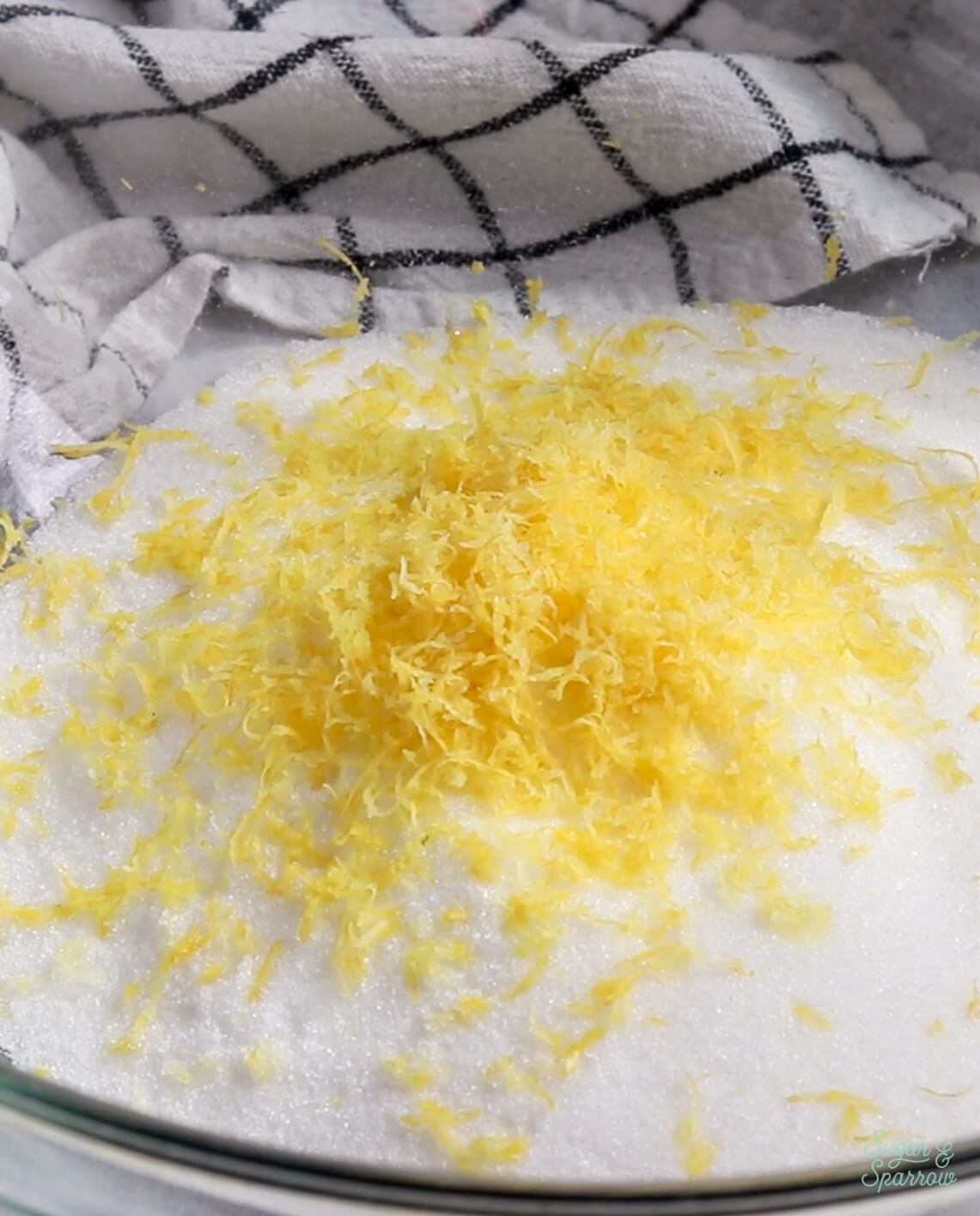
- Lemon zest + juice. In the beginning of the recipe, you’ll zest a lemon into the sugar and blend it all together to help the zest release all the natural oils. This creates an amazing lemon flavor from the beginning. We’ll add the lemon juice to the buttercream to take all the citrus flavor beyond!
- Lemon extract (optional). In addition to the zest in the cake, this is the best way to get a powerful lemon flavor. If you don’t have lemon extract, don’t worry! You can still make this cake without it and have an amazing lemon flavor – it will be a little more subtle in the cake, but once frosted with the lemon buttercream it’s absolutely delicious and totally lemony.
- Unsalted butter + vegetable oil. Both butter and oil serve as the fats in this recipe. I like to use both because the butter adds rich flavor while the oil adds supreme moisture. I always use plain vegetable oil, but you can use any kind of neutral oil you’re used to baking with (canola, avocado, etc).
- Egg whites. This cake uses all egg whites to keep it super light in color and texture. You can use fresh egg whites or ½ cup of carton egg whites.
- Whole milk. I prefer whole milk in this recipe because it has a high amount of protein and fat, which yields a super rich texture and flavor. Like I previously mentioned, we’ll be adding lemon juice to the whole milk to create homemade buttermilk. The chemical reaction that happens between those two ingredients makes this cake extra moist.
How to Get the Best Lemon Flavor
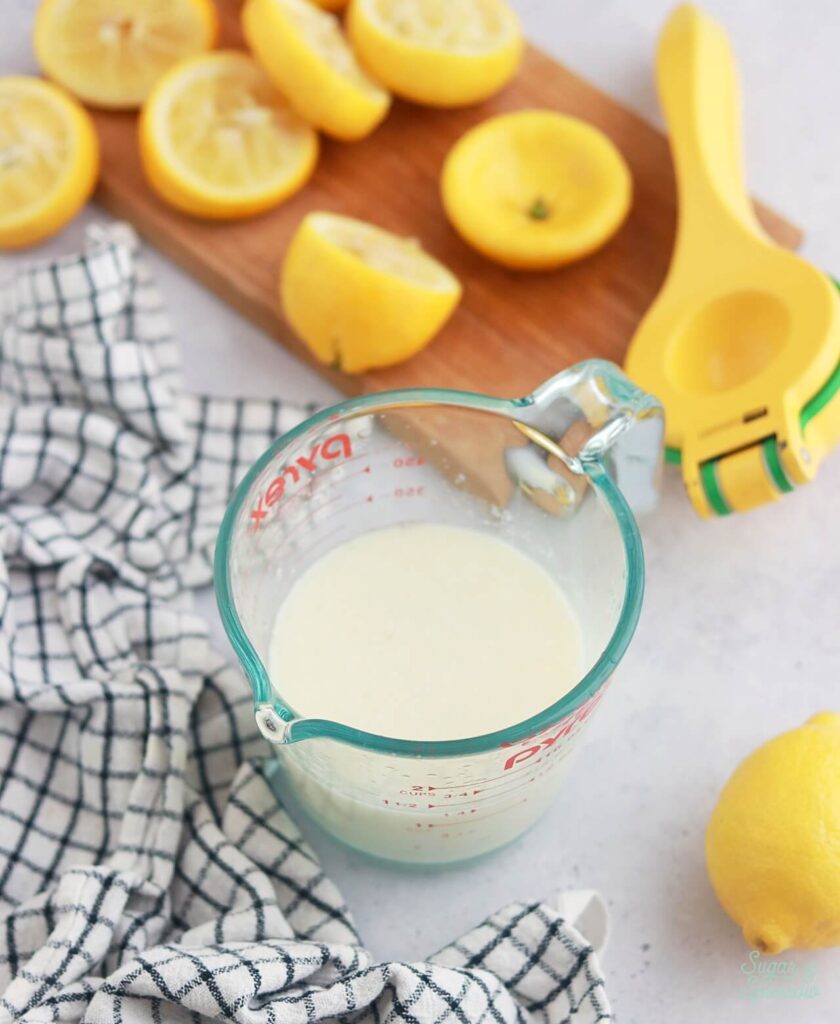
There’s a lot of lemon going on in this cake: lemon zest, lemon juice, and lemon extract. The recipe starts with zesting a lemon into the sugar and combining until the natural oils are released. The zest is much more powerful as a flavor additive than the lemon juice in a baked good – the juice tends to mostly evaporate in the baking process. Still, this recipe doesn’t waste the juice of that lemon you zested. Instead, we combine it with milk to make buttermilk for the end of the recipe, which will help make the cake supremely moist.
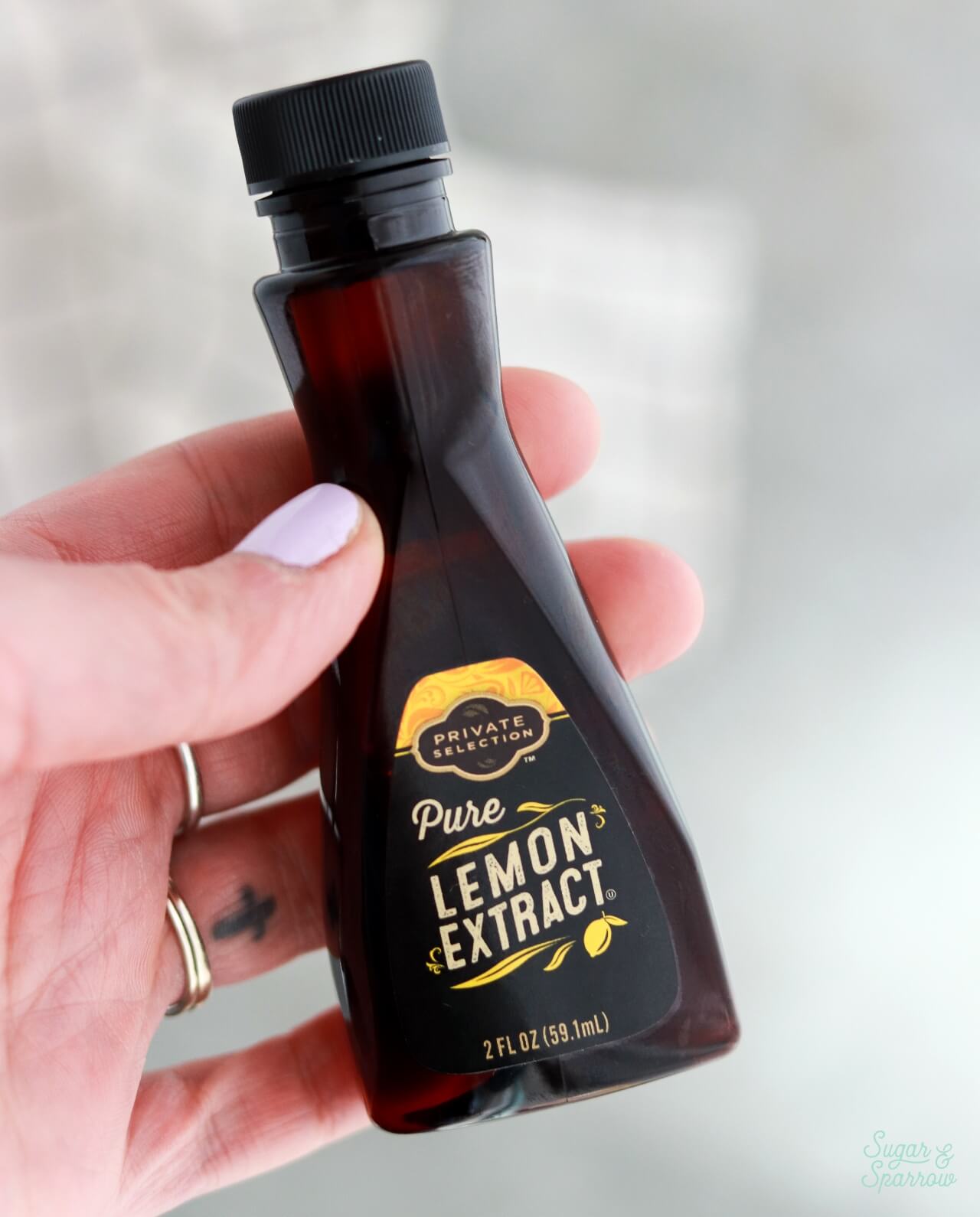
The ingredient that lends the most powerful lemon flavor is lemon extract. Lemon extract is basically lemon zest that has been ultra-concentrated and therefore, takes the lemon flavor in the cake to the next level. I made this ingredient optional because even without the extract, this cake is still delicious and has a subtle lemon flavor that is amplified when frosted with the lemon buttercream. If you’re a diehard lemon fan, add the extract for the best lemon flavor!
Bright & Tangy Lemon Buttercream
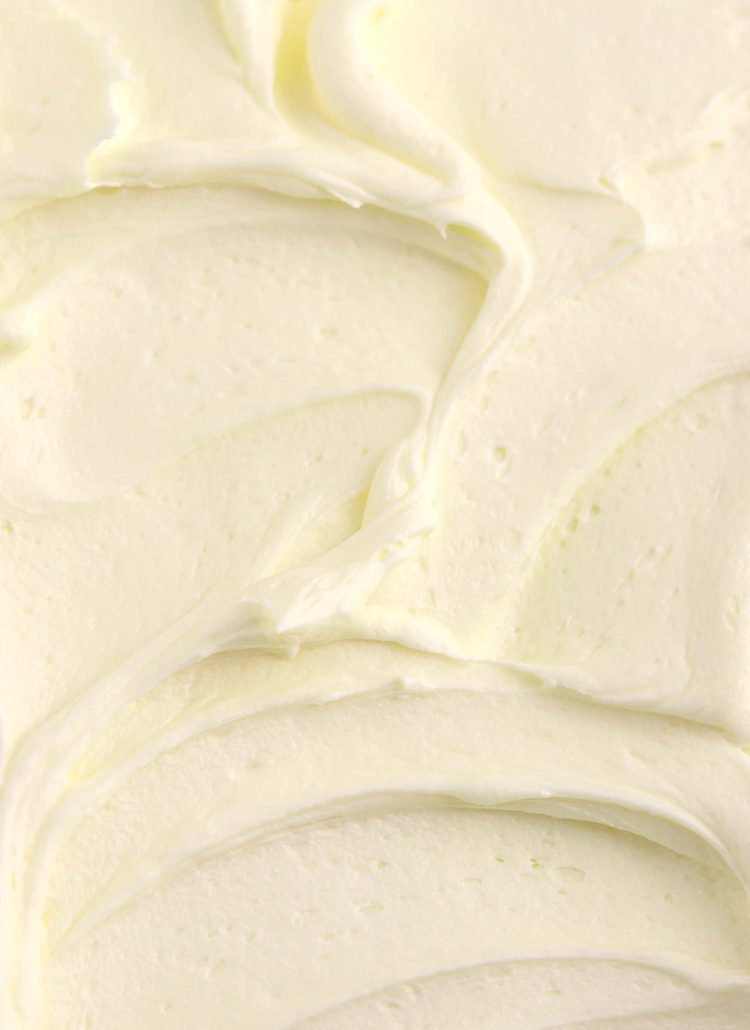
The lemon buttercream used to frost and decorate this cake not only has amazing lemon flavor, it’s super easy to make! It’s a very straightforward American buttercream that has been altered to be slightly less sweet than the average. Lemon juice is added at the end of the recipe to create the bright, tangy lemon flavor.
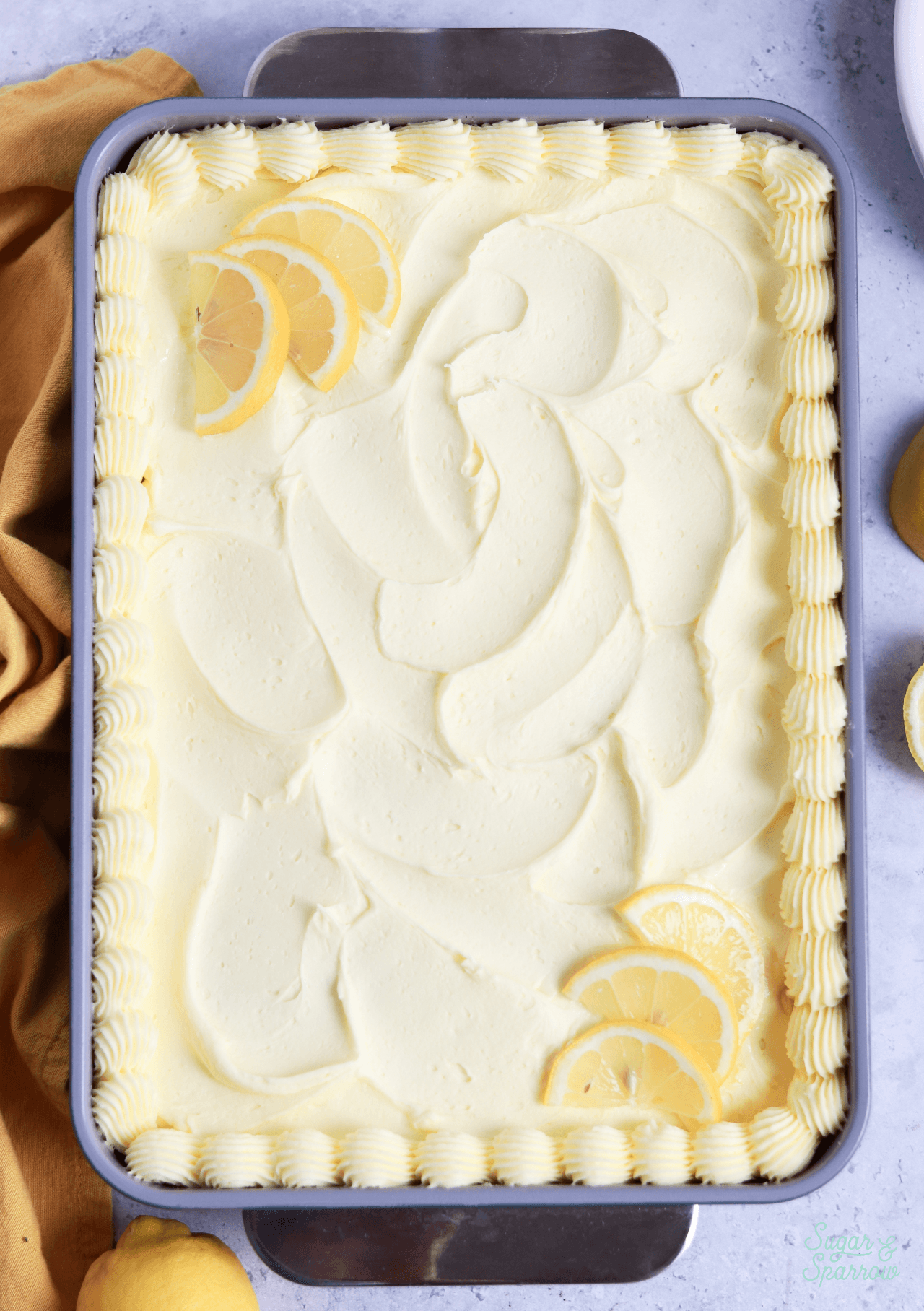
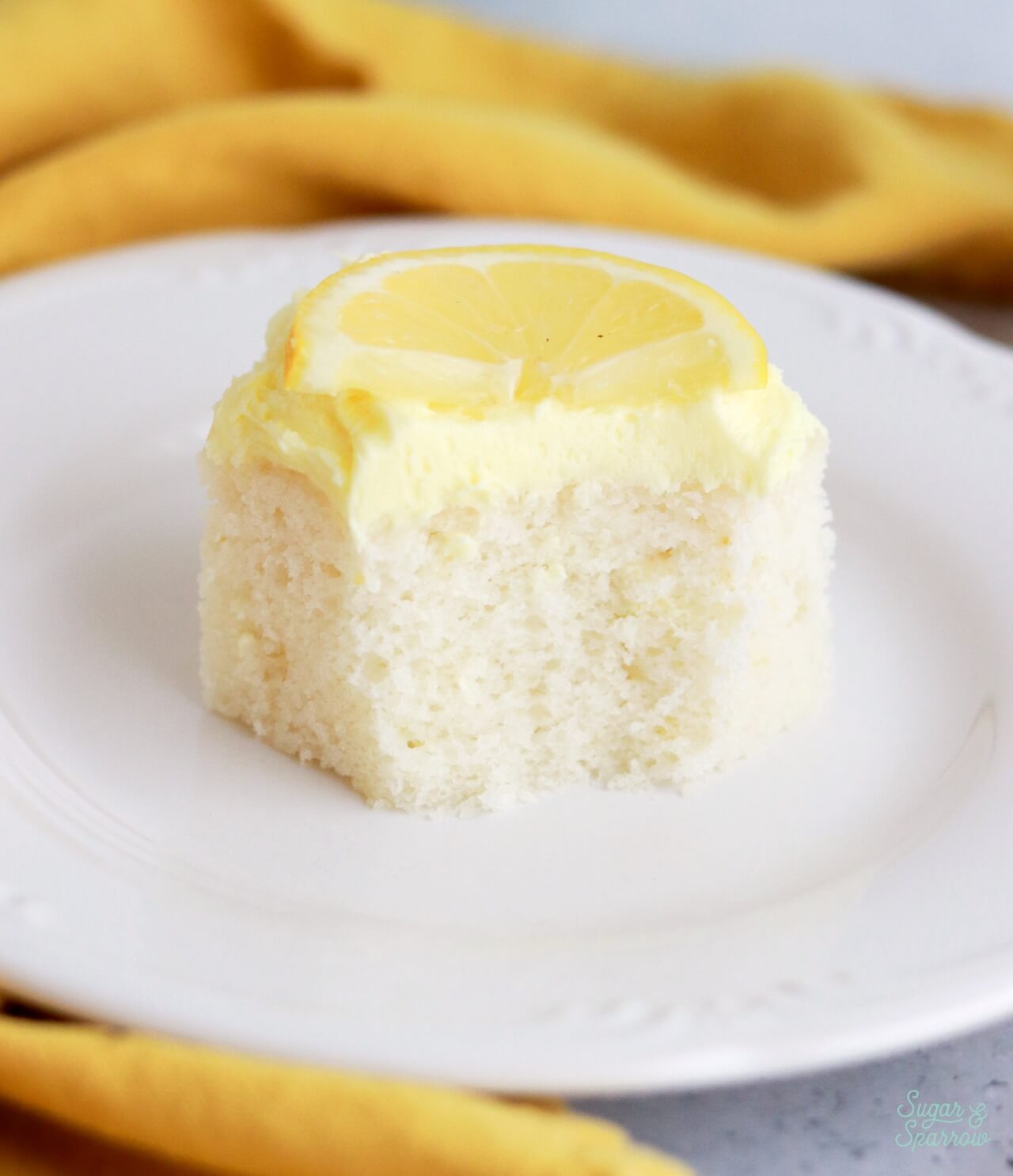
I did use a couple drops of yellow food coloring to create the sunny yellow color here. If you’d rather not use food coloring, the frosting will have more of a buttery yellow color naturally. Either way, it’s the perfect frosting for this soft and moist lemon sheet cake!
How to Decorate a Lemon Sheet Cake
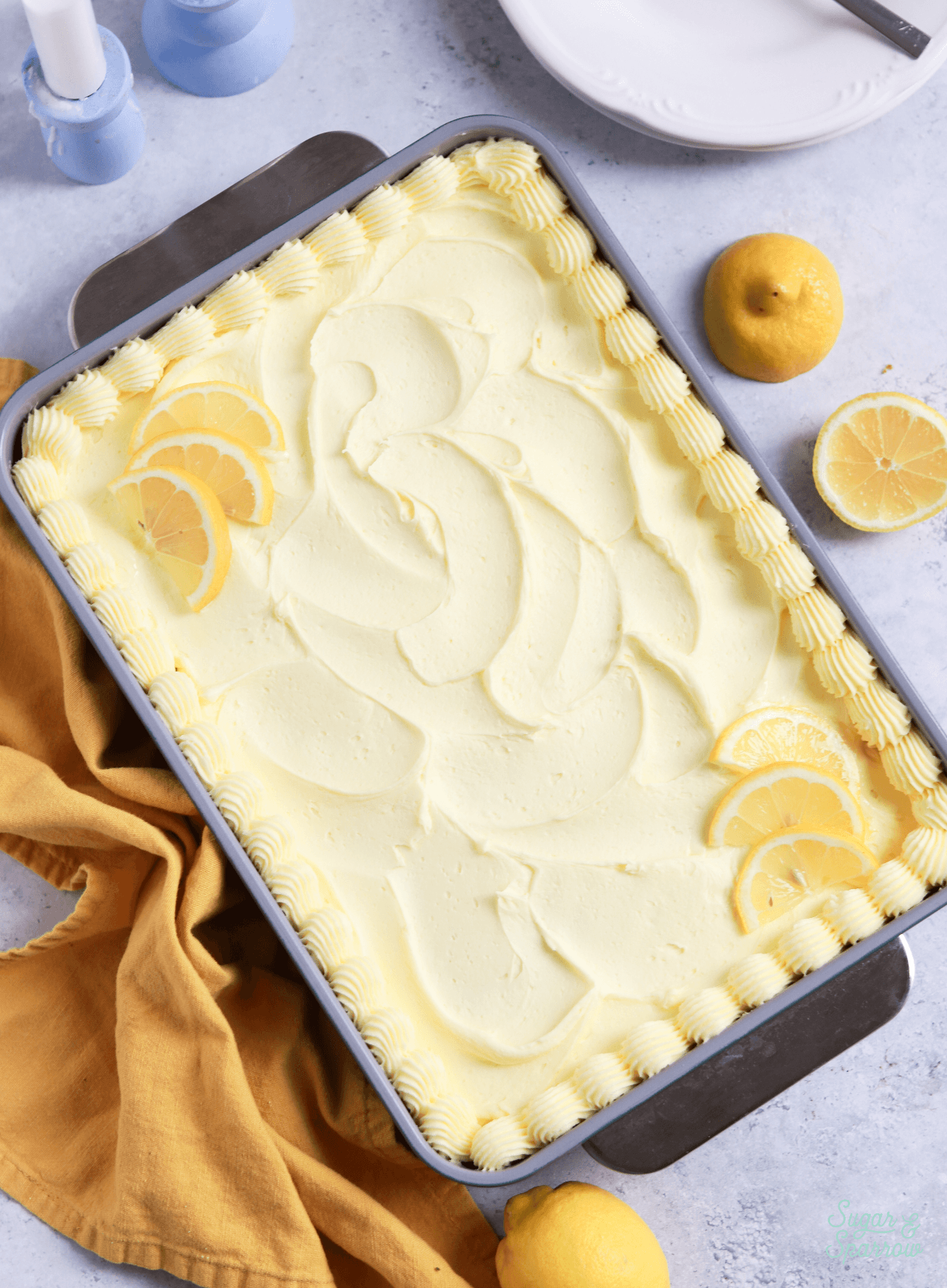
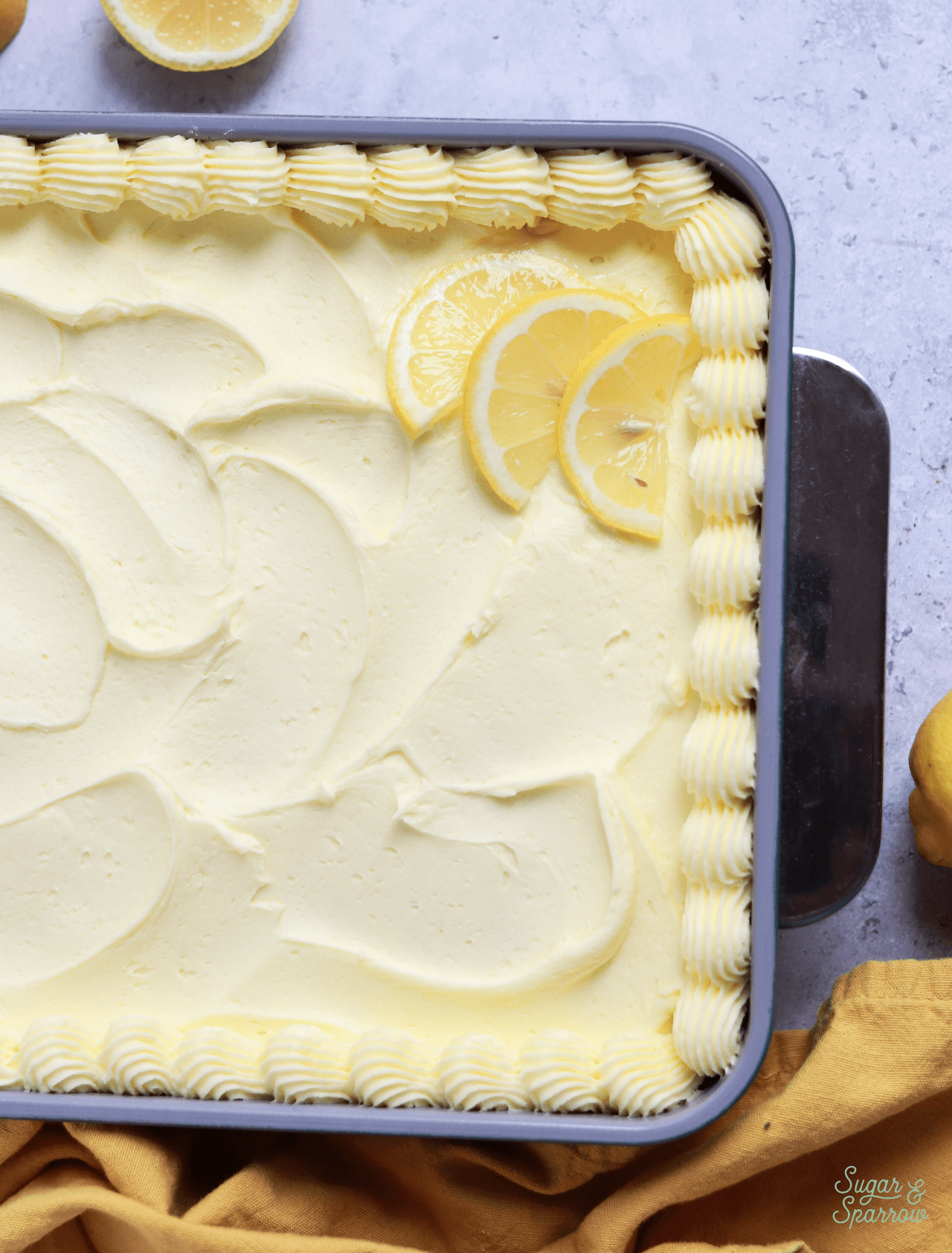
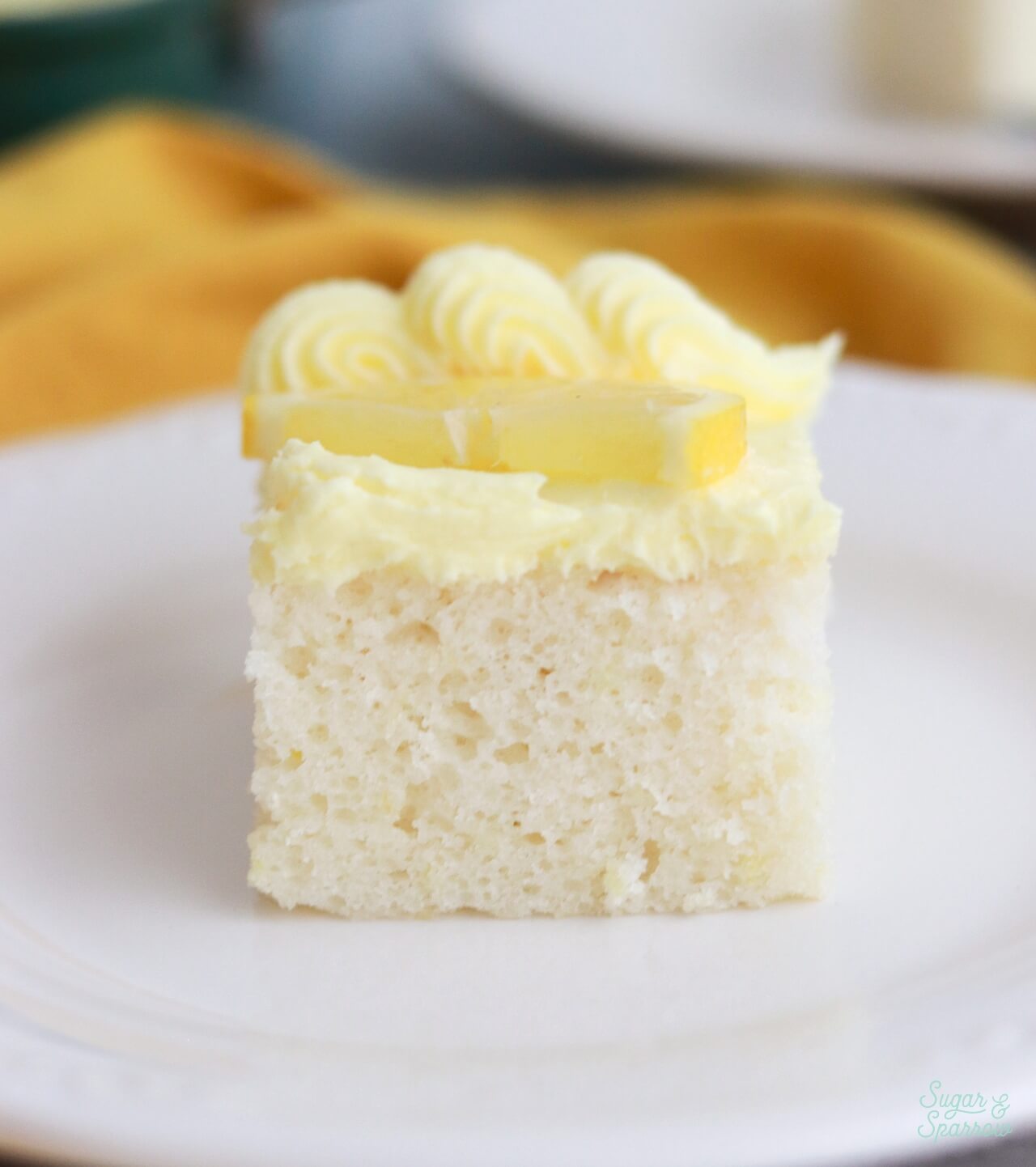
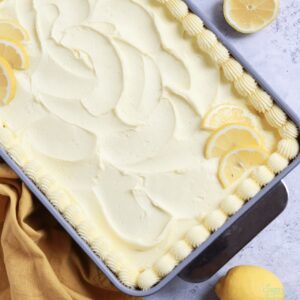
Once I made the lemon buttercream, I used it to frost a rustic finish on the lemon cake by simply swirling the frosting with an angled spatula. Once the surface of the cake was covered, I added the rest of the buttercream into a piping bag fitted with Wilton Tip 4B and piped a shell border around the edges of the cake before adding a few fresh lemon slices to a couple of the corners.
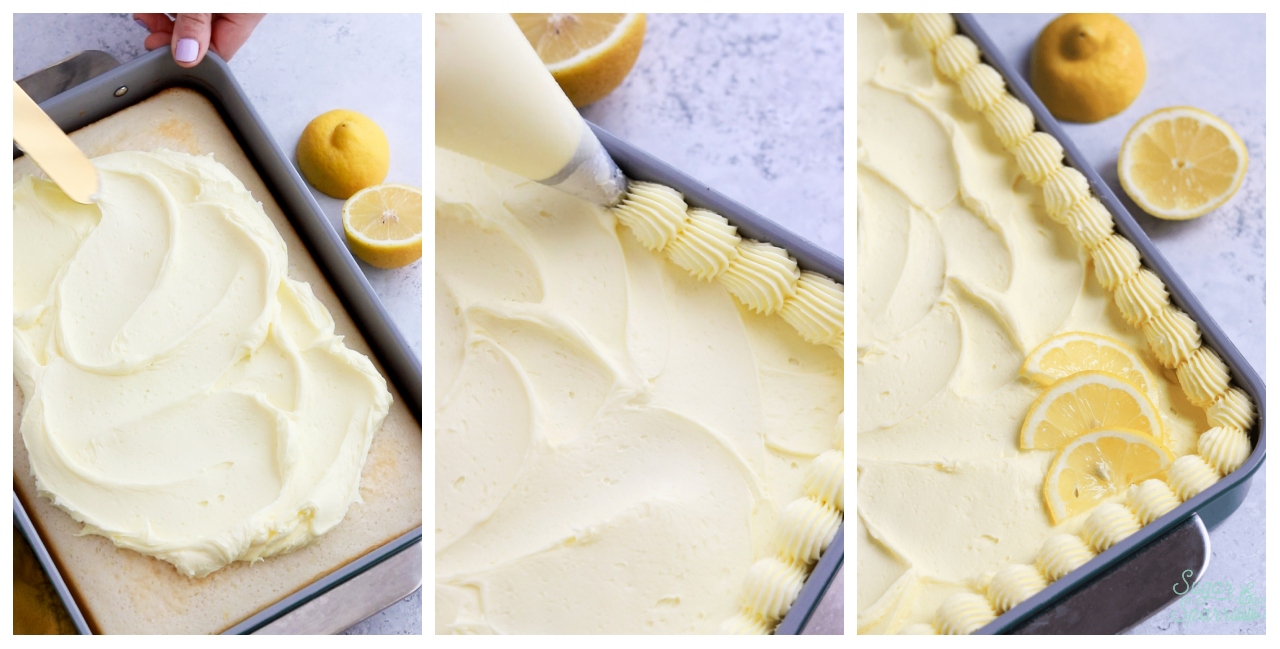
I chose to decorate this sheet cake in the pan I baked it in for simplicity, but if you’d rather remove it from the pan for decorating, do it! The frosting recipe makes enough to frost the tops and sides of the cake and pipe that shell border in case that’s what you’d like to do. If you don’t plan on doing the shell border or any intricate piping, you can use the measurements shown in this lemon buttercream recipe to make less.
Recipe FAQs
- Do I Sift the Flour Before or After Measuring? In this recipe, you’ll sift the flour before measuring. I recommend having a kitchen scale for the easiest workflow – you can place a bowl on the kitchen scale and sift the flour right into it, measuring exactly what you need without having to spoon and level the cake flour into cups.
- What if I Don’t Have Cake Flour? Cake flour makes this cake extra light and fluffy, so I do recommend making a trip to the grocery store for it. However, if you don’t have access to cake flour you can make your own homemade version using all-purpose flour (or plain flour) as a base. The instructions are in the notes section of the recipe card below.
- What if I Don’t Have Buttermilk? You can easily make a buttermilk substitute using whole milk + 1 tbsp of vinegar or lemon juice. Stir it together and let it sit for about 15 minutes before bringing it to room temperature if it’s not already. Don’t worry if the milk curdles, that’s actually a good thing here.
- Can I Use Carton Egg Whites Instead of Fresh? Yes. Substitute 1/2 Cup of pasteurized egg whites in place of the 4 large egg whites in the cake recipe. Just be sure to bring them to room temperature before adding them to the batter.
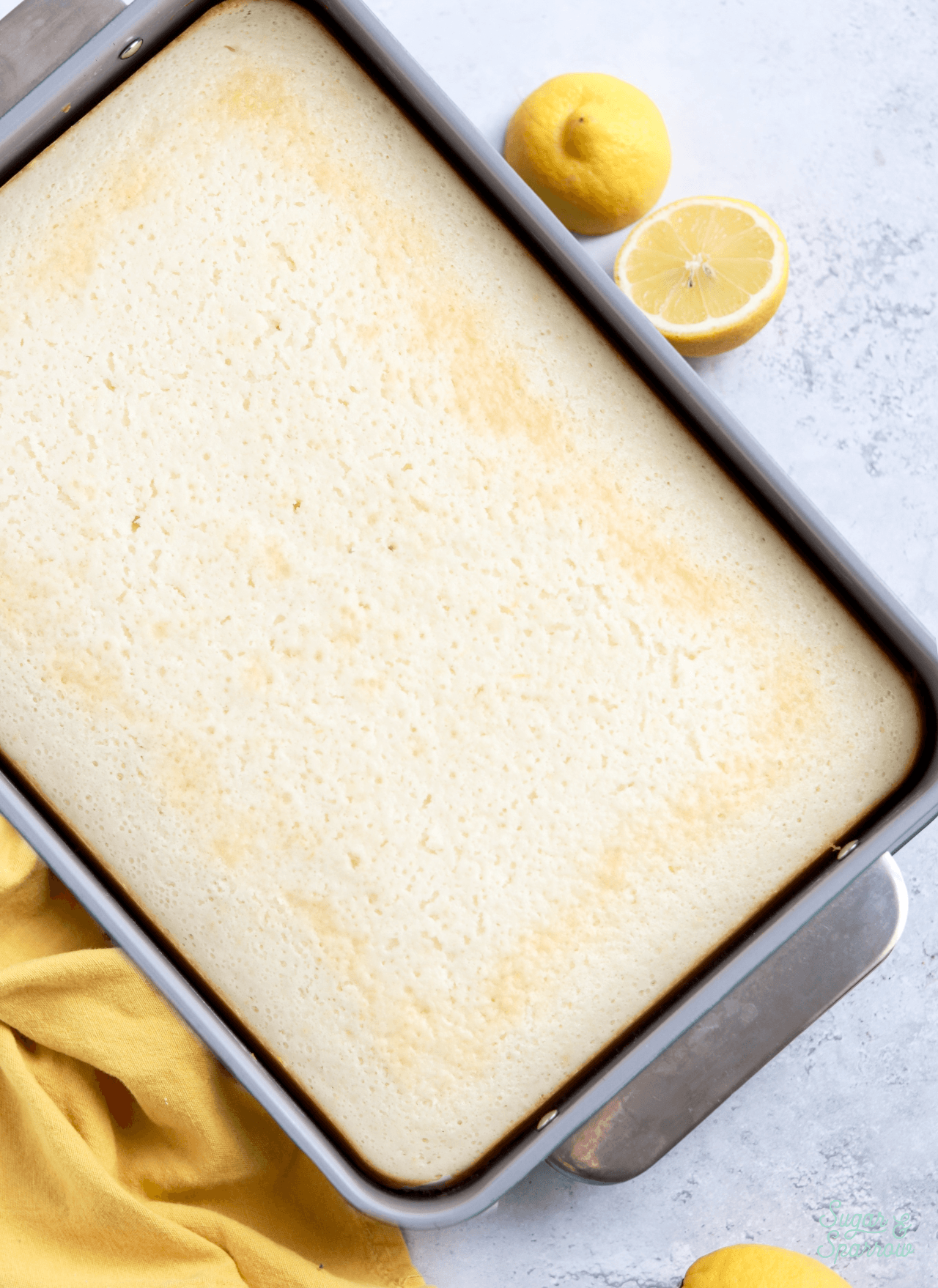
- How Tall is this Cake? The cake layer bakes up to about 1.5 inches (slightly shorter on the sides). The frosting and berries add another .5 inch or so, so altogether each slice ends up being about 2 inches tall. If you want a taller sheet cake with filling in between the layers, you can double the recipe. I’d recommend baking two separate cake layers vs. torting one taller cake layer.
More Sheet Cake Recipes You’ll Love
If you love making sheet cakes, here are some more recipes from my blog to add to your baking list:
- Vanilla Sheet Cake
- Chocolate Sheet Cake
- Funfetti Sheet Cake
- Strawberry Sheet Cake
- Red Velvet Sheet Cake
I hope you love this lemon sheet cake as much as I do! Let me know if you make it in the comments below (be sure to leave a star rating!) and feel free to tag @sugarandsparrowco on Instagram to show me if you post a photo. I love to see what you create with my recipes!
Lemon Sheet Cake
Ingredients
- 1/4 Cup (60ml) fresh lemon juice about 1 medium lemon
- 1 1/4 Cups (300ml) whole milk, room temperature
- 2 1/2 Cups (265g) sifted cake flour* DIY recipe in notes
- 1 Tbsp baking powder
- 1/2 tsp salt
- 1 1/2 Cups (300g) granulated sugar
- 1 Tbsp grated lemon zest about 1 medium lemon
- 1/2 Cup (113g) unsalted butter, room temperature
- 4 large egg whites, room temperature
- 1/2 Cup (120ml) vegetable oil
- 1/2 tsp pure lemon extract (optional)
Lemon Buttercream*
- 1 1/2 Cups (339g) unsalted butter, room temperature
- 5 1/4 Cups (630g) powdered sugar
- 3 Tbsp (45ml) fresh lemon juice
- 1 Tbsp whole milk, room temperature
- 1/4 tsp salt, or to taste
- 2-3 drops yellow food color gel (optional)
Garnish
- 6 lemon slices
Instructions
Make the Lemon Sheet Cake
- Preheat the oven to 325°F (163ºC). Prepare a 9×13 cake pan by spraying the sides with baking spray and lining the bottom with parchment paper.
- In a jar or measuring cup, combine the lemon juice with the milk. Stir and set aside. It will curdle by the time you add it to the recipe at the end, and the curdling is the chemical reaction we want!
- Add the sifted cake flour, baking powder, and salt into a bowl and whisk to combine. Set aside.
- Using a stand mixer fitted with the paddle attachment, mix together the sugar and lemon zest until fragrant and well combined, about 1 minute. Add the butter and cream it together with the lemon-sugar mixture on medium speed until light and fluffy, 2-3 minutes.
- With the mixer on low, add the egg whites one at a time. Add the vegetable oil and lemon extract (if using) and beat at high speed for one minute.
- Turn the mixer off and add the cake flour mixture all at once. Mix on low speed until just combined, then slowly pour in the lemon-milk mixture. Mix until smooth and fully combined, about 30 seconds.
- Pour the batter into the prepared cake pan and bake for 28-32 minutes, until a toothpick inserted into the center comes out clean or with a few moist crumbs. Cool completely to room temperature before frosting, either in the pan or carefully turn the cake out of the pan and onto a cooling rack.
Make the Lemon Buttercream
- In a stand mixer fitted with the paddle attachment, whip the butter on high speed until creamy and light in color, about 5 minutes.
- Add the powdered sugar in two additions, mixing thoroughly for a minute and scraping down the bowl and paddle after each addition.
- Add the lemon juice, whole milk and salt and mix on low until the buttercream is well incorporated and smooth, 1-2 minutes. Mix in the yellow food color gel, if using.
Assembly
- Once the lemon sheet cake has cooled, you can choose to decorate it in the pan (as pictured) or remove it from the pan for decorating. Use the lemon buttercream to frost the cake and garnish with fresh lemon slices.
- To create the design pictured, use about 2/3 of the lemon buttercream to frost rustic swirls on the cake with an angled spatula. Add the rest of the lemon buttercream into a piping bag fitted with Wilton Tip 4B and pipe a shell border around the edges. Garnish with the lemon slices by fanning them out and placing them on opposite corners.
Notes
- The lemon cake can be made ahead and stored at room temperature, covered in plastic wrap, for up to two days. Alternatively, you can cover with plastic wrap and store in the freezer for up to two months before thawing to room temperature.
- The lemon buttercream can be made ahead and stored in an airtight container in the refrigerator for up to two weeks. When you’re ready to use it, bring it back to room temperature and re-whip in your stand mixer to bring back to smooth buttercream consistency.

I made this for my daughter’s birthday and everyone loved it! It was delicious!
Yay, Danielle! I’m so happy this recipe was a hit!
I was curious if I use lime instead of lemon, would the lime juice mixed with the milk still curdle? Are you basically making buttermilk? Could that be used in place of the lemon juice and milk..or is there a reason you didn’t use Buttermilk? I’m trying to make this a very bright lime sheet cake. Thank you
Hi Jaclyn! I haven’t tried this recipe with lime but my hunch is that it would work! And yes, the citrus + milk curdles to make a homemade buttermilk. Using the juice of the citrus adds a little flavor too, which is why I chose to do homemade buttermilk instead of store bought. Hope that helps!
Thank you for your quick reply I appreciate it! Ah I figured that’s what you were doing but didn’t want to assume. Can I substitute the milk for the same exact amount of buttermilk? I’ll still use the same amount of lemon juice (lime in my case) in the batter but won’t mix it in with the buttermilk. I just want to double check because the cake looks so light and airy and real buttermilk versus homemade buttermilk can be a bit heavier so I dont want to ruin the cake by assuming. I’ll also report back how the lime swap goes , I got amoretti key lime extract which im so excited to try. Thank you again 🙂
Yay! I can’t wait to see how the lime version goes!
Hi there! Just finished the lime version! It is stunning. You once again created an absolutely perfect flawless cake! So soft and moist its heaven! I used grams, only changes i made was swapping the milk for buttermilk, lemon juice for key lime juice, lemon zest for key lime zest and lemon extract for amoretti oil based key lime terpenless extract ( 1 tsp per recipe) i made two cakes, one at a time so id have 4 layers after cutting them in half. I didn’t mix lime juice with buttermilk because I used buttermilk instead of making it. I used an aluminum 9x13x4 pan baked at 325°F for 26 minutes. I made a key lime curd, graham crumble, key lime cream cheese buttercream and key lime simple syrup. In total i used 8 pounds of fresh key limes. If I never zest or juice a key lime again it will be to soon haha. The one issue i had is in your photos the cake looks about 3 inches thick? Mine was 1.5 inches on all sides. I measured with an ruler. I noticed another person commented the same issue. My baking powder is brand new, I used grams and followed directions precisely. Is it the angle of the photo that makes your cake look thicker? Did I do something wrong? Thank you for yet another beautiful cake your the best pastry chef and recipe developer ever you have a gift with cake recipes!
Hi Jaclyn! I’m so encouraged that a lime version of this cake worked well and I can’t wait to try it myself! Thank you for these meticulous notes! Also, those toppings sound absolutely incredible. About the height of the cake, it’s actually correct for it to measure 1.5 inches. I think the camera angle makes it look taller. If you want to bake a taller cake next time you can make 1.5x the batter and bake for 35-40 minutes. I’m going to add a note about this in the blog post asap!
Not sure what I did wrong. My cake is only an inch high. The batter turned out lovely and it baked well for the time you said. Seems like I somehow got less cake in a 9 x 13.
Hi Whitney! I had the same problem. I even made the recipe twice with different brands of baking powders. One was brand new and the other has been opened for some months. Same result, just one inch tall. What am I doing wrong? I made sure ingredients were room temperature. I did notice the cake was slightly taller when I took out the oven and then it lost highly, but not one inch. Maybe I over mixed the batter?
Hi Andreina! After re-making this cake and measuring the height, mine is actually only an inch tall on the edges as well. It’s a little higher in the center (a little shy of 1.5 inches), but this cake is meant to be that height. If you want a taller cake, you can make 1.5x this recipe and the cake will be closer to 2 inches tall. You’ll need to bake it for longer, closer to 45 minutes. Hope that helps!
This recipe looks/sounds amazing! I’m wanting to make mini cakes, for a work party, (those small rectangular disposable tins with lids) would this work for that purpose also?
Hi Nancy! You can use this recipe for the small rectangular tins. I would fill them no more than 1/2 full and bake at 325F, check for doneness at 14 minutes and add time from there if needed. Hope that helps!
Definitely going to make your recipe for this lemon cake and frosting. Can you use butter crisco vs. the butter and oil for this recipe? And do you have the recipe to make sugared lemons or something like that to decorate?
Hi Linda! I have never tried this recipe with butter crisco so that would be an experiment. I recommend making it with the butter and oil as listed for best results. This is the recipe I use for candied lemons and I love it: https://therecipecritic.com/candied-lemon-slices/#wprm-recipe-container-134270