
In the cake making process, you might be tempted to skip ahead to your final coating of frosting after you fill and stack your cake layers. If you’re a perfectionist though (like I am, to a fault), it’s so worth it to go the extra mile and crumb coat your cake. Not only will this prevent crumbs from getting into your final layer of frosting, it also helps to create a stable foundation for your final layer of frosting. In fact, if you’ve ever wondered how to get a super smooth buttercream finish, crumb coating is one of the essential steps.
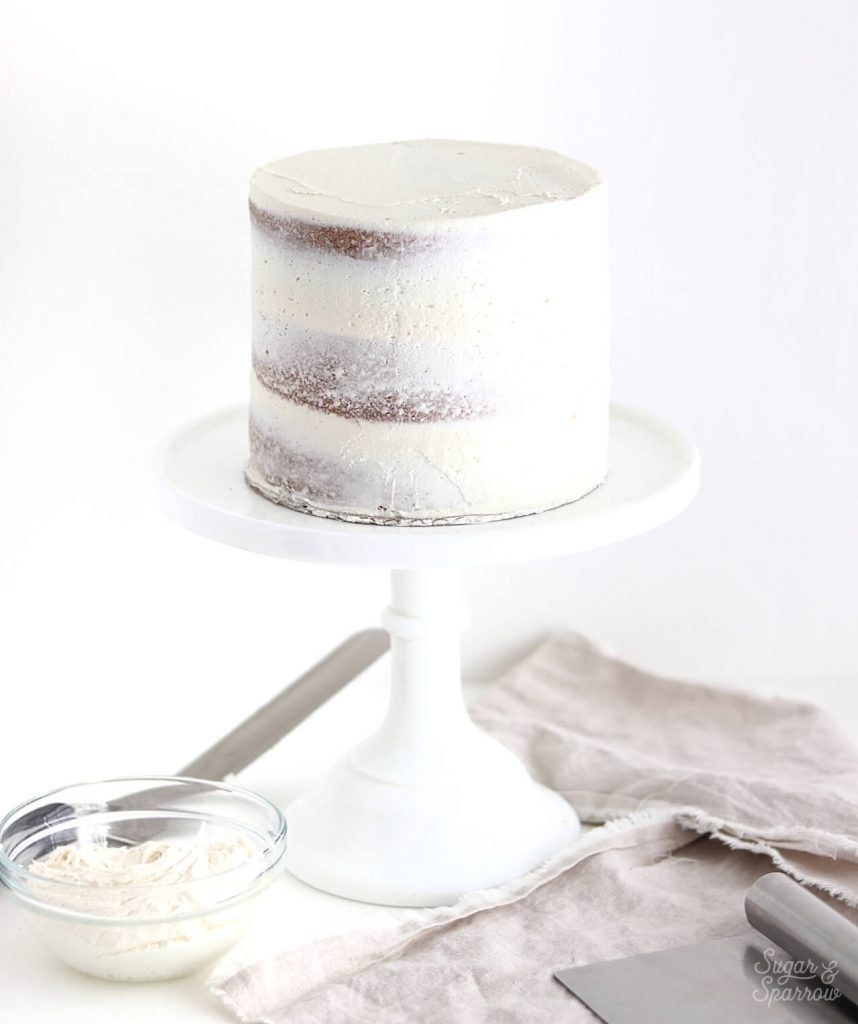
If you’ve never heard of crumb coating a cake, it simply means frosting a thin layer of buttercream all over your cake after it’s been filled and stacked. Here’s a quick video I shot of the process before I walk you through the steps below:
Want to see more Cake Basics videos like this one? Head to my YouTube Channel to see the growing collection. You’ll also find tons of cake recipes and decorating videos to inspire you and broaden your skill set – be sure to hit the subscribe button so you never miss a new one!
Why Crumb Coat?
There are two main reasons why you’d want to crumb coat your cake: 1) catching any loose crumbs that might want to make their way into your final layer of buttercream and 2) creating a smooth, even surface and ensuring your cake is level for your final layer.
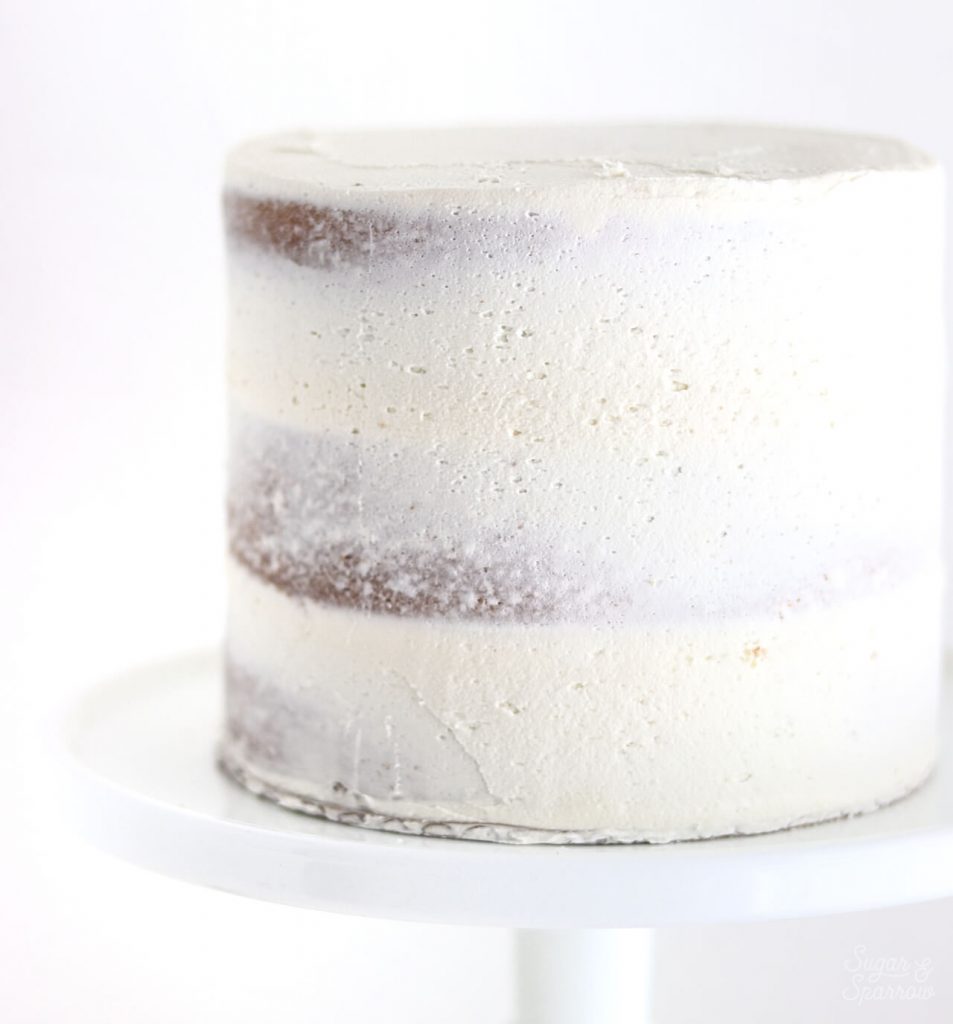
But it’s not enough to simply crumb coat your cakes. Chilling your cake after crumb coating is what glues all those pesky crumbs down and helps the entire structure set into a firm, sturdy foundation. It’s a step I never miss when making cakes.
What Type of Frosting is Best for Crumb Coating?
You can use any type of frosting for crumb coating your cake – basically whatever you’re planning on using for your final layer of frosting. If you need some recommendations, my Basic Vanilla Buttercream, Swiss Meringue Buttercream, or any of my frosting recipes are ideal consistency for both crumb coating your cake and adding your final layer of frosting.
How to Crumb Coat Your Cake
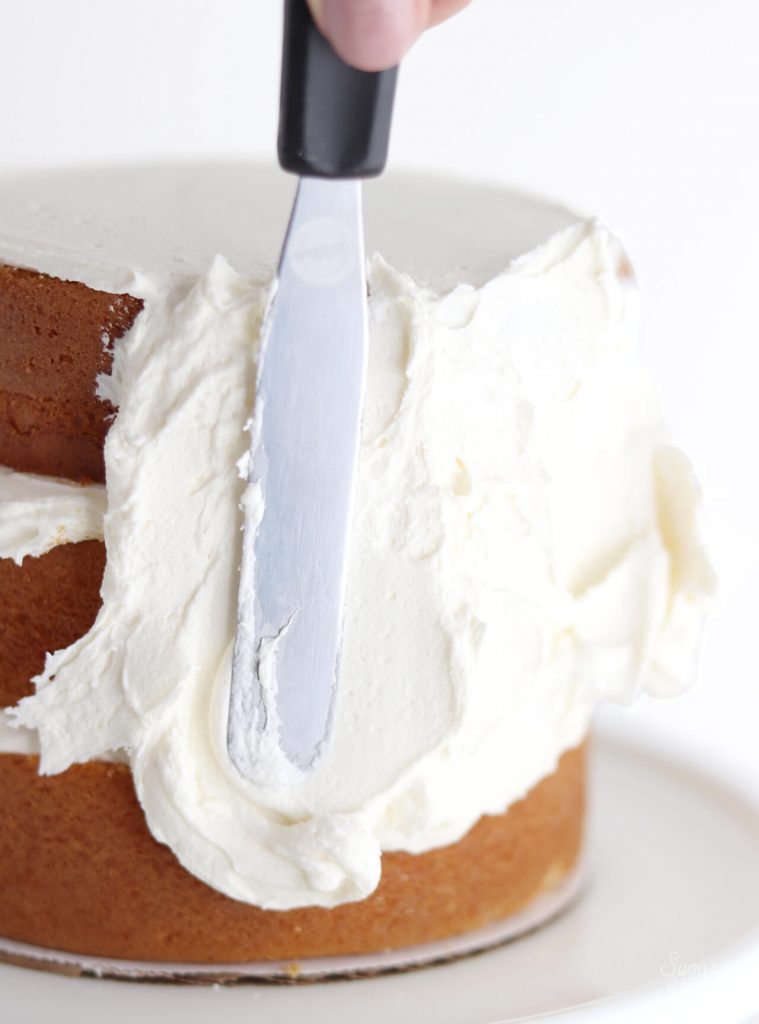
To crumb coat your cake without getting any crumbs in your batch of frosting, you’ll want to start by adding about one cup of that frosting into a small bowl. This is what you’ll use to crumb coat instead of dipping your spatula in and out of the larger bowl of frosting. Place your filled and stacked cake on a turntable. The turntable pictured is no longer available but here is the one I currently use. You’ll want to use an anti-slip pad underneath your cardboard cake circle so it doesn’t slide around.

Start by frosting a thin layer of frosting on the top of your cake and smoothing it down with an angled spatula.
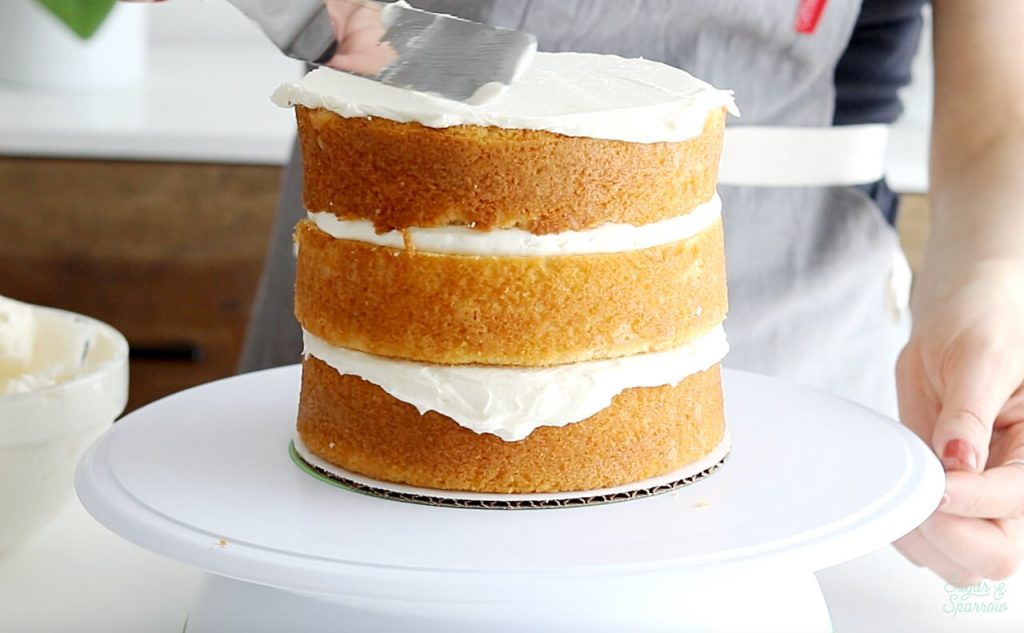
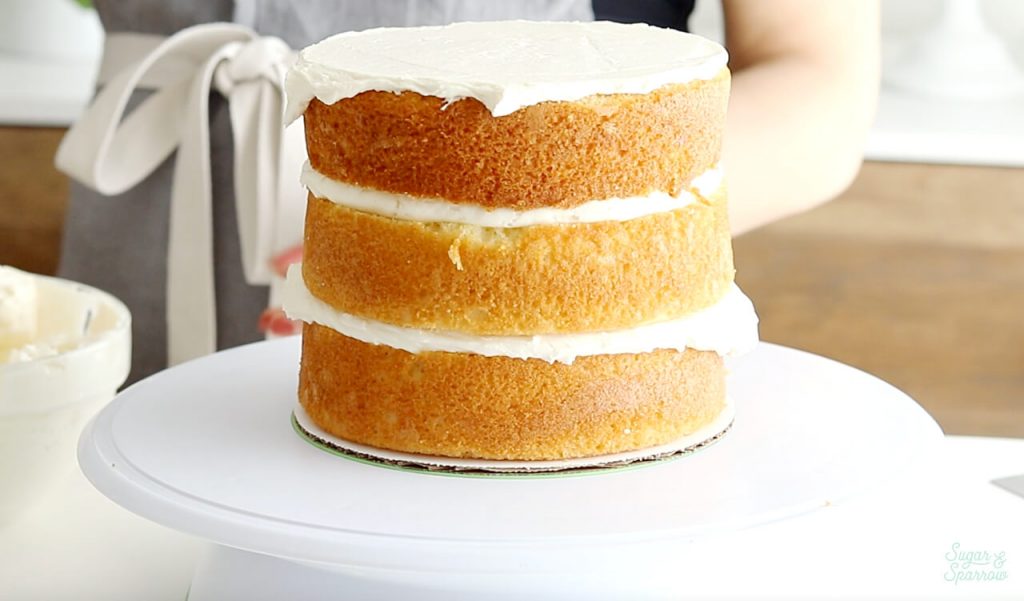
Next, add a thin layer of frosting all around the sides of the cake and use an icing smoother to get the sides smooth and level. Basically hold the icing smoother at a 45 degree angle towards you while you rotate the turntable and scrape off the excess onto the edge of your bowl. Be sure to fill in any patchy areas with more buttercream and repeat the process of smoothing and scraping until you’ve got a thin, yet level crumb coat.
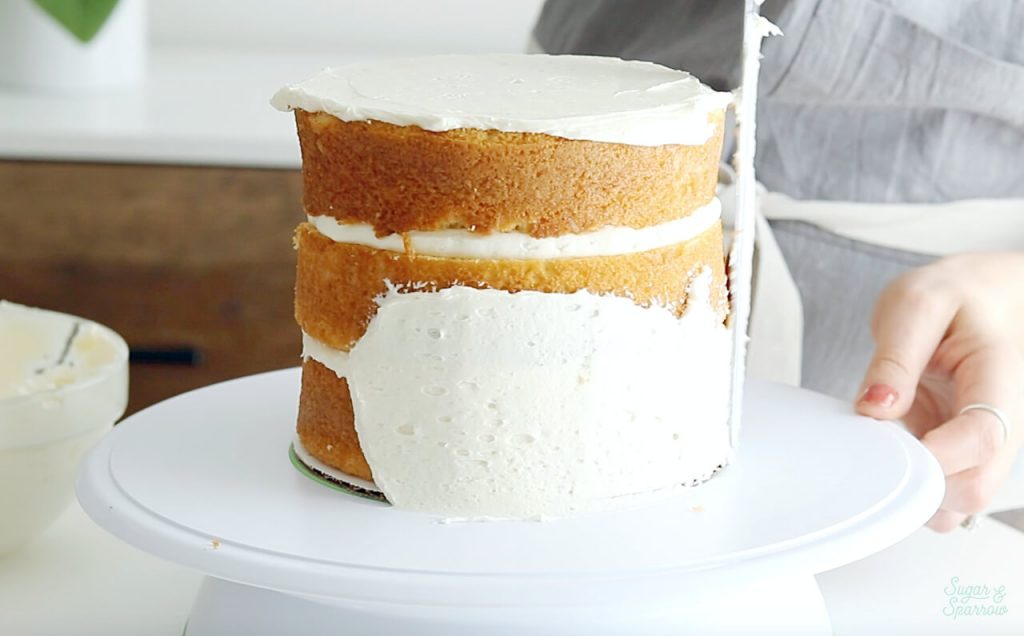
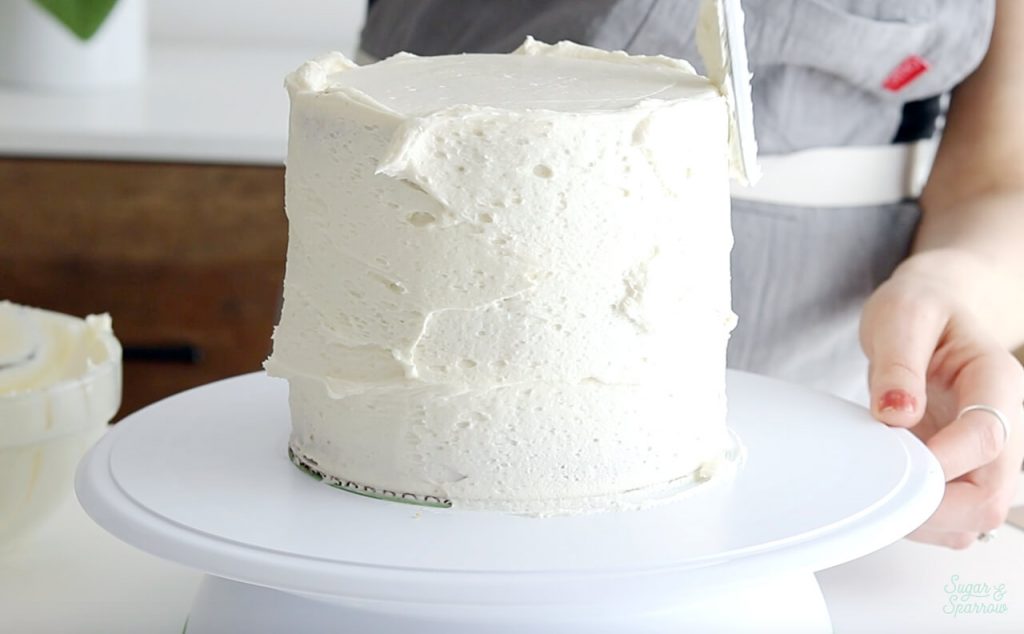

You’ll notice that a frosting “crown” has formed around the top edges of your cake, which is what you want to see. Using a clean angled spatula, swipe those edges toward the center of the cake to create sharp edges all around the top.

When your cake is looking level and covered in a nice, thin crumb coat, pop the whole thing (turntable and all) into the refrigerator to chill for at least 30 minutes.

Like I mentioned previously, chilling your cake will make the buttercream firm, essentially glueing down any crumbs within the crumb coat and creating a stable foundation for your next layer of frosting.
Next Steps
After refrigerating for at least 30 minutes, you’re ready to move on to your final layer of frosting. If you’re short on time though, it’s perfectly fine to refrigerate a crumb coated cake overnight. Even though the crumb coat layer of buttercream is thin, it helps preserve the cake layers beneath and keep everything moist and fresh. For an extra layer of protection, you could also wrap the crumb coated cake in plastic wrap and refrigerate it like that.
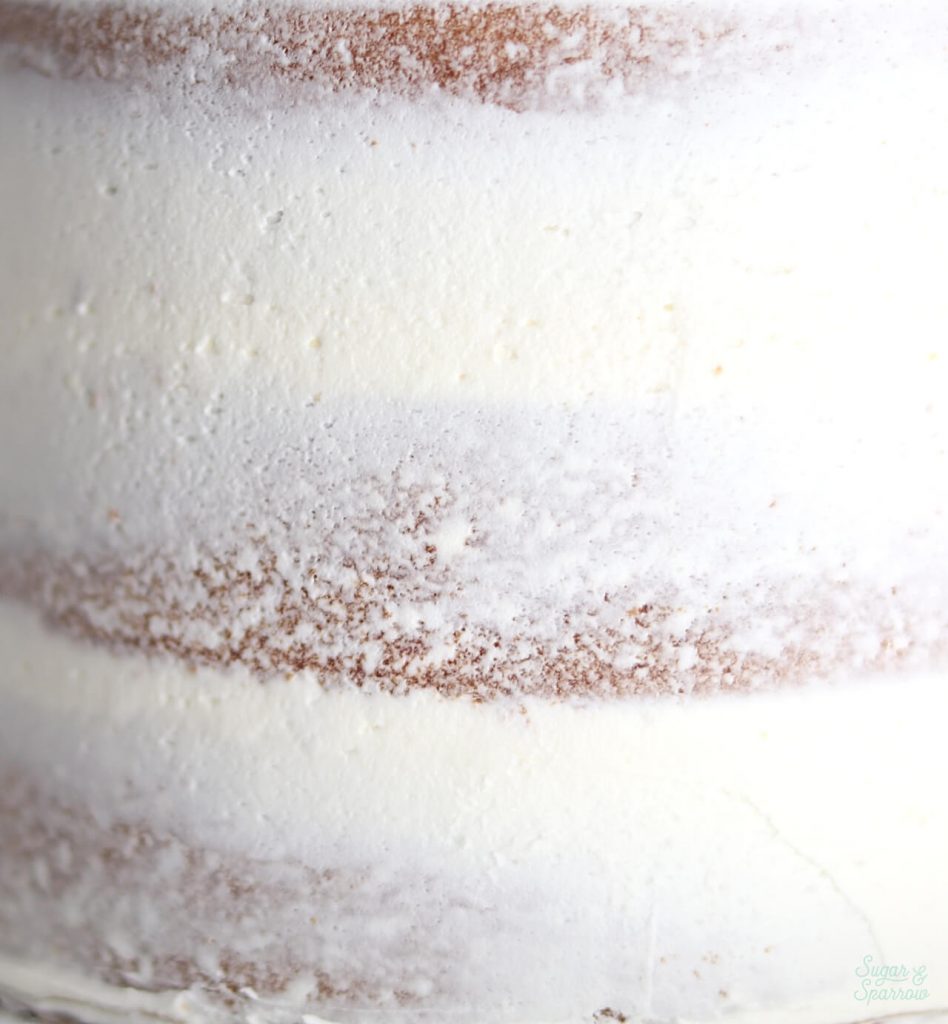
After the crumb coated cake is firm to the touch, you’re ready to move on to decorating! Here are some helpful posts to inspire you:
- How to frost a smooth buttercream finish
- How to frost a rustic buttercream finish
- How to color your buttercream
- How to add sprinkles to a cake
- How to add a chocolate ganache drip
Final Note for Making Cakes Ahead of Time
Do keep in mind that the longer the amount of time between baking your cake layers, decorating them, and serving them, the less fresh your cake will be. I have lots of details and sample timelines for making cakes ahead of time here. A typical timeline for me looks like:
- Day 1: Bake cake layers + make buttercream
- Day 2: Fill, crumb coat, frost and decorate the cake
- Day 3: Photograph and serve the cake
It’s perfectly fine to split up “Day 2” into two separate days though: filling and crumb coating one day, frosting and decorating the next. This will split the timeline into four days between baking and serving, but the cake will remain fresh.
Want more Cake Basics? Head here to see all of the posts and learn the methods of caking I’ve come to love over the years. I’m cheering you on every step of the way!


What a great tutorial! When I baked one of your cake recipes, I ended up needing to make a second batch of buttercream. When you post the recipes with your cakes in your book, is that just for the frosting and I should make an additional batch for the crumb coat? Or should that cover both the crumb coat and frosting? I am loving all of your recipes and am so excited to keep getting better at baking!
Hi Erica! So happy you found this tutorial helpful! Most of my standalone frosting recipes make about 3 Cups of buttercream, so you’ll need to double them for filling, crumb coating, and frosting a layer cake. The yield should be stated in the notes section of each recipe on my blog. Hope that helps!
I can’t wait to bake this!! I do have a question about whether I can use a different colour buttercream to the crumb coat for the final coat? I want to make this cake as is but have it be a pink raspberry buttercream on the outside coat. Will the dark crumb coat bleed into my pink raspberry coat?
Hi there! You can totally use a different buttercream to crumb coat than what you use for your final coat! Just be sure to refrigerate after crumb coating so that the colors don’t mix together.
What crumb coat do you use in a chocolate cake?
Plain buttercream or chocolate one thanks
Hi Rachel! I crumb coat a chocolate cake with whatever frosting I’m using to frost it. So if you’re using a chocolate frosting, crumb coat with chocolate as well.
Hi,
How do I convert your “Perfect One-Bowl Chocolate Cake Recipe” from two 8-inch pans to two 10-inch pans?
Also, do you have a recipe for Carrot Cake that would be suitable for frosting and decorating?
And the corresponding Cream Cheese Frosting?
Many thanks,
Bev
Hi Bev! I would make 1.5x the chocolate cake recipe to make enough for 2 10-inch pans. I do have a recipe for carrot cake in my book! I also posted it on Instagram here: https://www.instagram.com/p/C4Gi5ABP-uh/ and my cream cheese frosting recipe is here: https://sugarandsparrow.com/cream-cheese-buttercream-recipe/
Thank you! One question, have you ever had your buttercream not want to stick to the cake in all places? Yes I eventually got it covered but it was tough because it was moving around.
Hi Paige! If the buttercream isn’t spreading easily, that usually means it’s a little too thick. Here’s a blog post I wrote on buttercream consistency that explains how to thin it out. This will make the buttercream much easier to work with: https://sugarandsparrow.com/buttercream-consistency/
Your tips and recipes are fantastic! What do you do with the crumb coat frosting you scrape off? Is it garbage because it might have crumbs in it?
So happy my tips have been helpful, Ardith! Since I start with about 1 Cup of frosting in a separate bowl for the crumb coat, I don’t have much (if any) left over after crumb coating. If I do, I’ll usually spread it onto some cake scraps for a little snack 🙂